You've probably got a browser tab open somewhere with a headline promising something outrageous. Twenty percent. Six months. "The shot that changes everything."
I'd like to talk to you like an adult instead.
Here's the short version, up front: GLP-1 receptor agonists are a class of prescription medications originally developed for type 2 diabetes, several of which now carry FDA approval for chronic weight management. They work on appetite regulation and gastric emptying through a hormone pathway your body already uses. They work well for a lot of people, modestly for some, and not at all for others. And there is a meaningful legal and safety difference between an FDA-approved product and a compounded copy of one — a difference most marketing never explains.
That's the article. Everything below is the detail that actually matters when you're deciding what to do with your own body.
Why I care about getting this right
I co-founded tb2.health, and I was our own patient zero. I went through the intake, the labs, the awkward first conversation about what I actually ate at 11pm, all of it. Not as a marketing exercise. Because I needed it.
What surprised me wasn't the medication. It was how much of the outcome had nothing to do with the medication. It was protein I didn't want to eat. It was a clinician catching a dose escalation I wanted to rush. It was the boring stuff.
I'm not a clinician. I want to say that plainly and early, because the internet is full of people who blur that line. I run a company that provides physician-supervised care. The physicians make the medical calls. I write about what I've learned sitting next to them and being on the receiving end of it.
What a GLP-1 receptor agonist actually is
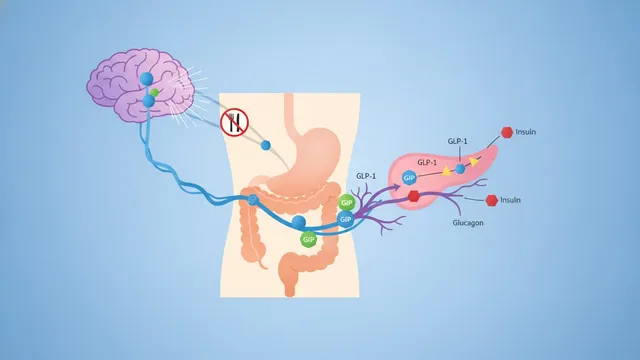
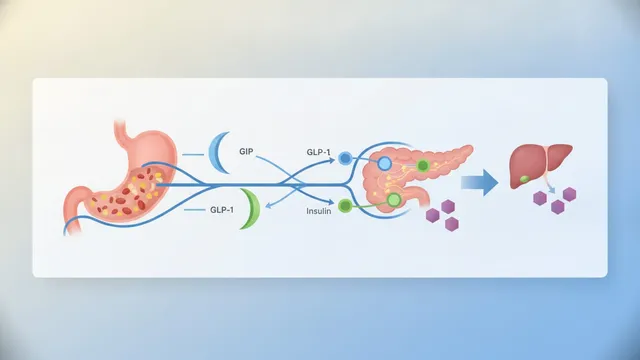
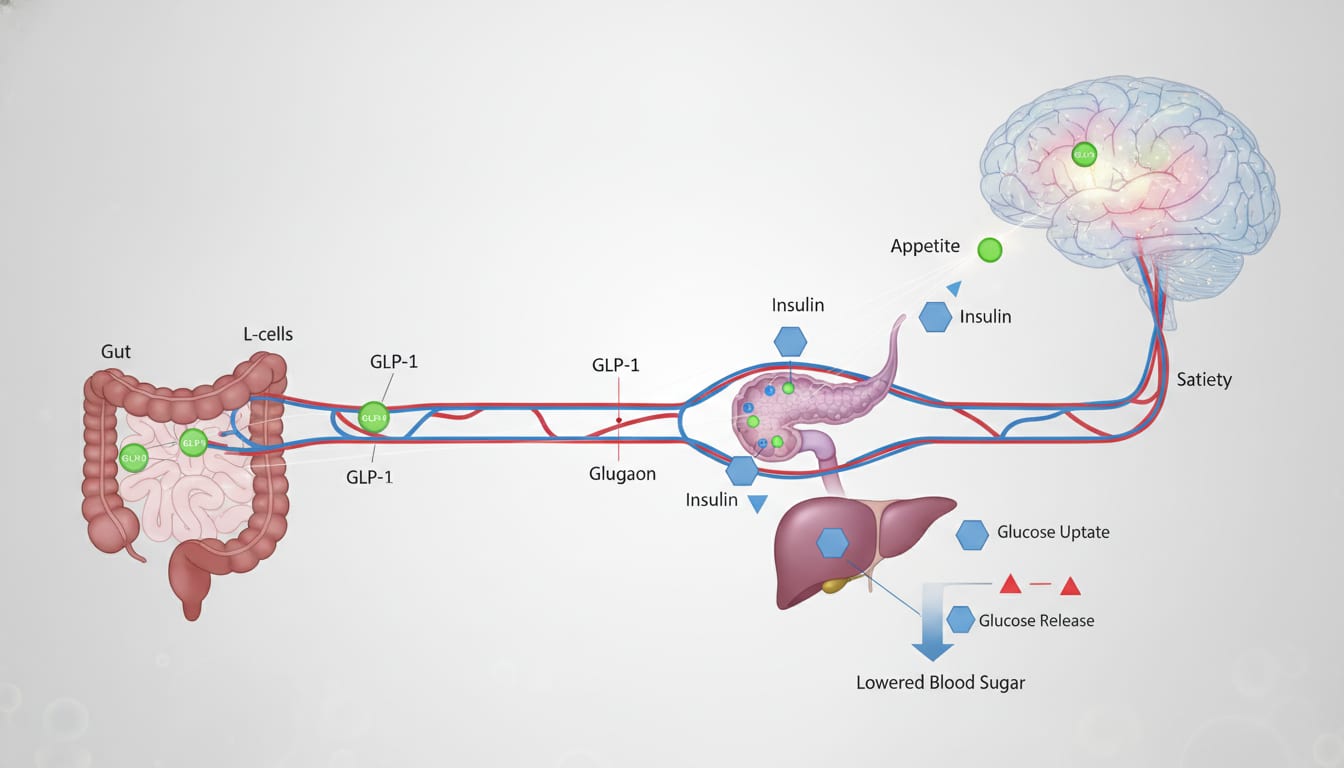
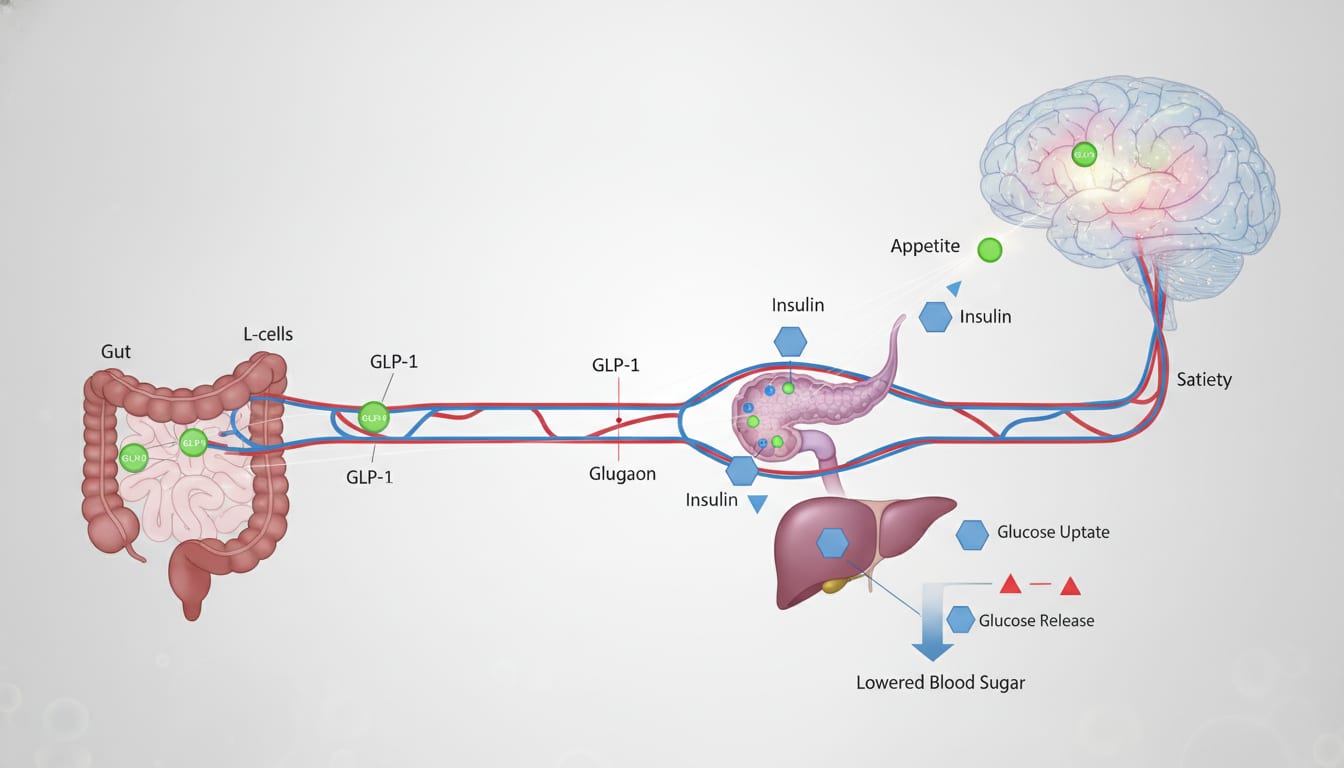
Glucagon-like peptide-1 is a hormone your small intestine releases after you eat. It nudges the pancreas to release insulin when glucose is elevated, suppresses glucagon, slows how quickly your stomach empties, and signals satiety to the brain. Natural GLP-1 degrades within minutes.
GLP-1 receptor agonists are engineered molecules that bind the same receptor and resist that rapid breakdown, so the signal persists for days instead of minutes. Some newer agents are dual agonists — they act on both the GLP-1 receptor and the glucose-dependent insulinotropic polypeptide (GIP) receptor. The National Institute of Diabetes and Digestive and Kidney Diseases has a readable overview of where these sit among diabetes medications.
Practical translation: you feel full sooner, you stay full longer, and the constant background negotiation with food gets quieter. Patients describe it as the "food noise" turning down. That's not a clinical endpoint, but it's the thing people actually notice first.
Approved indications: what the label covers
This matters more than people realize, because "approved" is not a single thing. Different molecules in this class carry different indications.
| Indication category | What it means |
|---|---|
| Type 2 diabetes (glycemic control) | The original approved use for this drug class, dating to 2005 with the first agent |
| Chronic weight management | Approved as an adjunct to reduced-calorie diet and increased physical activity, for adults meeting specified BMI criteria with or without weight-related comorbidities |
| Cardiovascular risk reduction | Certain agents carry approvals for reducing risk of major adverse cardiovascular events in specific populations |
| Moderate-to-severe obstructive sleep apnea | A dual GIP/GLP-1 agonist received FDA approval in December 2024 for adults with obesity and moderate-to-severe OSA |
| Chronic kidney disease | An indication added for a GLP-1 agent in patients with type 2 diabetes and CKD |
Note the phrase "adjunct to a reduced-calorie diet and increased physical activity." That's not marketing softening. It's in the approved labeling, and it reflects how the trials were run. Every participant in the pivotal trials also received lifestyle counseling. The medication was never studied as a standalone.
You can verify any specific product's indications through the FDA's Drugs@FDA database, which publishes approved labeling directly.
How efficacy varies — and it varies a lot
Here's where I get irritated with how this class gets sold.
In the STEP 1 trial (Wilding et al., New England Journal of Medicine, 2021), adults with overweight or obesity without diabetes received once-weekly semaglutide 2.4 mg plus lifestyle intervention for 68 weeks. Mean change in body weight was −14.9% versus −2.4% with placebo. But look at the distribution rather than the average: roughly 86% achieved at least 5% reduction, about 69% reached 10%, about 51% reached 15%, and around 32% reached 20%.
Flip that last number. Roughly two-thirds did not reach 20%. About one in seven didn't clear 5%.
In SURMOUNT-1 (Jastreboff et al., NEJM, 2022), tirzepatide at 72 weeks produced mean reductions of approximately 15% to 21% depending on dose. Same principle applies — those are means with wide individual spread around them.
Three things drive that spread, based on what the literature and our clinicians consistently see:
- Whether you tolerate the therapeutic dose. Gastrointestinal side effects lead some people to stop escalation or discontinue entirely. Discontinuation rates for adverse events in the trials ran roughly 4–7%.
- Whether protein and resistance training are in place. Weight reduction from caloric restriction includes lean mass. Preserving it is a nutrition and training problem, not a pharmacology problem.
- Whether treatment continues. In STEP 4 (Rubino et al., JAMA, 2021), participants switched to placebo after 20 weeks regained a substantial portion of what they'd lost. The extension study of STEP 1 found similar patterns after withdrawal. Obesity behaves like a chronic condition. Treat it like one.
Averages describe cohorts. They do not forecast you. Anyone telling you what number you'll hit is guessing.
FDA-approved versus compounded: the distinction to understand
This is the part I'd most want a family member to read.
An FDA-approved drug has been through premarket review for safety, efficacy, and manufacturing quality. A compounded drug has not. Compounding is a legitimate, long-standing pharmacy practice — combining or altering ingredients to meet a specific patient need — but as the FDA states directly, compounded drugs are not FDA-approved and the agency does not verify their safety, effectiveness, or quality before they reach patients.
During the 2022–2024 shortages of certain GLP-1 products, compounded versions became widely available under provisions that permit compounding of drugs on FDA's shortage list. Those shortages were subsequently resolved — tirzepatide in December 2024 and semaglutide in February 2025 — which changed the regulatory picture for compounding these molecules considerably.
The FDA has published specific concerns, including reports of dosing errors when patients self-administered from multi-dose vials requiring unit conversion, and the marketing of salt forms such as semaglutide sodium and semaglutide acetate, which are not the same active ingredient as the approved products. Read the agency's own page: FDA's Concerns with Unapproved GLP-1 Drugs Used for Weight Loss.
| FDA-approved product | Compounded preparation | |
|---|---|---|
| Premarket review for safety and efficacy | Yes | No |
| Manufacturing inspected under FDA-approved process | Yes | Facility-dependent; 503B outsourcing facilities are subject to CGMP and FDA inspection, 503A pharmacies are not |
| Standardized labeling and Medication Guide | Yes | Varies |
| Active ingredient form | As approved | May include unapproved salt forms |
| Adverse events tracked in FDA post-market surveillance | Yes | Inconsistent |
If any provider offers you a compounded preparation, ask directly: Is this from a 503A pharmacy or a registered 503B outsourcing facility? (FDA publishes the list of registered outsourcing facilities.) What is the exact active ingredient? Is it supplied in a prefilled pen or a vial requiring me to draw a dose? What is the legal basis for compounding it right now?
A provider who can't answer those cleanly is a provider you should keep shopping past.
What our program includes
I'll keep this short and factual, because you didn't come here for a pitch.
The tb2.health GLP-1 program is built around clinical supervision rather than transaction volume. That means a medical intake and health history review, evaluation of eligibility against clinical criteria, prescribing decisions made only by a licensed clinician when appropriate, structured dose titration with check-ins, side-effect management guidance, and nutrition and activity support running alongside the medication rather than as an afterthought. Patients have a point of contact for questions between visits. If a clinician determines the therapy isn't appropriate for you, they say so.
The detail on how the program is structured lives on our site if you want it.
What we don't do is promise a number. We can't. Nobody honestly can.
Where the clinician comes in — not me
Everything in this article is educational context. It is not a determination about your situation.
Whether a GLP-1 receptor agonist is appropriate for you depends on your medical history, current medications, contraindications, and factors a licensed clinician evaluates directly. This class carries a boxed warning regarding thyroid C-cell tumors observed in rodent studies and is contraindicated in people with a personal or family history of medullary thyroid carcinoma or Multiple Endocrine Neoplasia syndrome type 2. There are documented considerations around pancreatitis, gallbladder disease, and anesthesia planning for procedures.
If you're already on one of these medications and something feels wrong — severe or persistent abdominal pain, vomiting you can't keep ahead of, signs of dehydration — contact your clinician or seek care. Don't post about it in a forum and wait.
Talk to a clinician. Ours, your primary care physician, an endocrinologist. Just talk to one.
The part I actually want you to take away
The medication is a tool. A genuinely good one, backed by more high-quality evidence than most things sold in the weight loss aisle. It is not a decision you make from a landing page, and it is not a substitute for figuring out what you eat and how you move.
I went into this expecting the injection to be the hard part. It wasn't. The hard part was Tuesday. Every Tuesday. Protein at breakfast when I wasn't hungry, walking when I'd rather not, showing up for the check-in when the scale hadn't budged in three weeks.
Plateaus happen. Weeks go sideways. That's not failure, that's the shape of the thing.
You're already further along than you think — you're reading the boring version instead of the hype version. That instinct will serve you better than any molecule will.
Paul Moss Co-founder, tb2.health