You already know GLP-1 exists. That's not the question anymore.
The question is what it actually does inside a body that has stopped responding to its own insulin, and whether that mechanism has anything to do with the number your doctor circled on your last lab report. Fair question. Most explanations you'll find online either drown you in receptor pharmacology or reduce the whole thing to "it makes you less hungry," which is true and also about ten percent of the story.
So let me give you the other ninety.
First, a quick confession about why I care
I'm Paul, co-founder of tb2.health, and I was patient zero here. Not in a marketing way. In an "I built the intake form and then filled it out myself" way.
My own story started with a fasting glucose number that had been quietly creeping up for about six years while I told myself it was a rounding error. It wasn't. I'm not a clinician, and nothing in this article is a diagnosis. But I've read more endocrinology papers than any reasonable person should, mostly because I wanted to understand what was happening to me before someone handed me a prescription.
Here's what I wish someone had drawn on a napkin for me on day one.
Insulin resistance in one paragraph
Insulin is a key. Your muscle, liver, and fat cells have locks. In insulin resistance, the locks get stiff, so the pancreas makes more keys to force the door. Blood sugar stays roughly normal for years because of that overproduction, which is exactly why insulin resistance is so easy to miss. Eventually the beta cells tire out, key production drops, and glucose starts climbing. That's the slide from insulin resistance to prediabetes to type 2 diabetes, and the NIDDK describes it in roughly those terms.
Scale: the CDC estimates more than 38 million Americans have diabetes and about 98 million adults have prediabetes, with the majority of that second group unaware of it.
Where GLP-1 actually fits
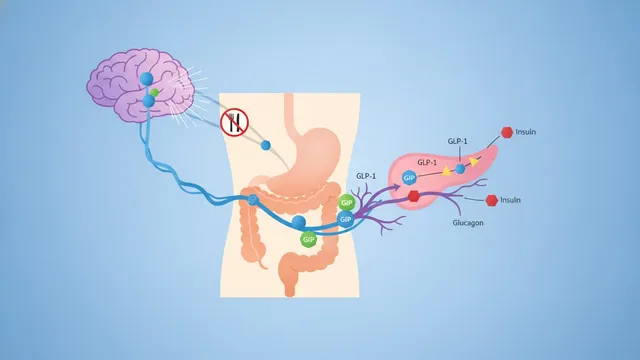
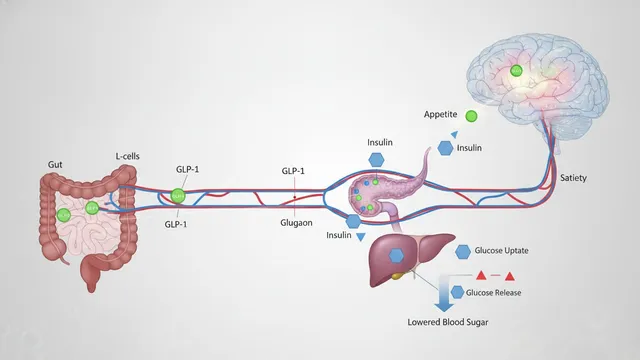
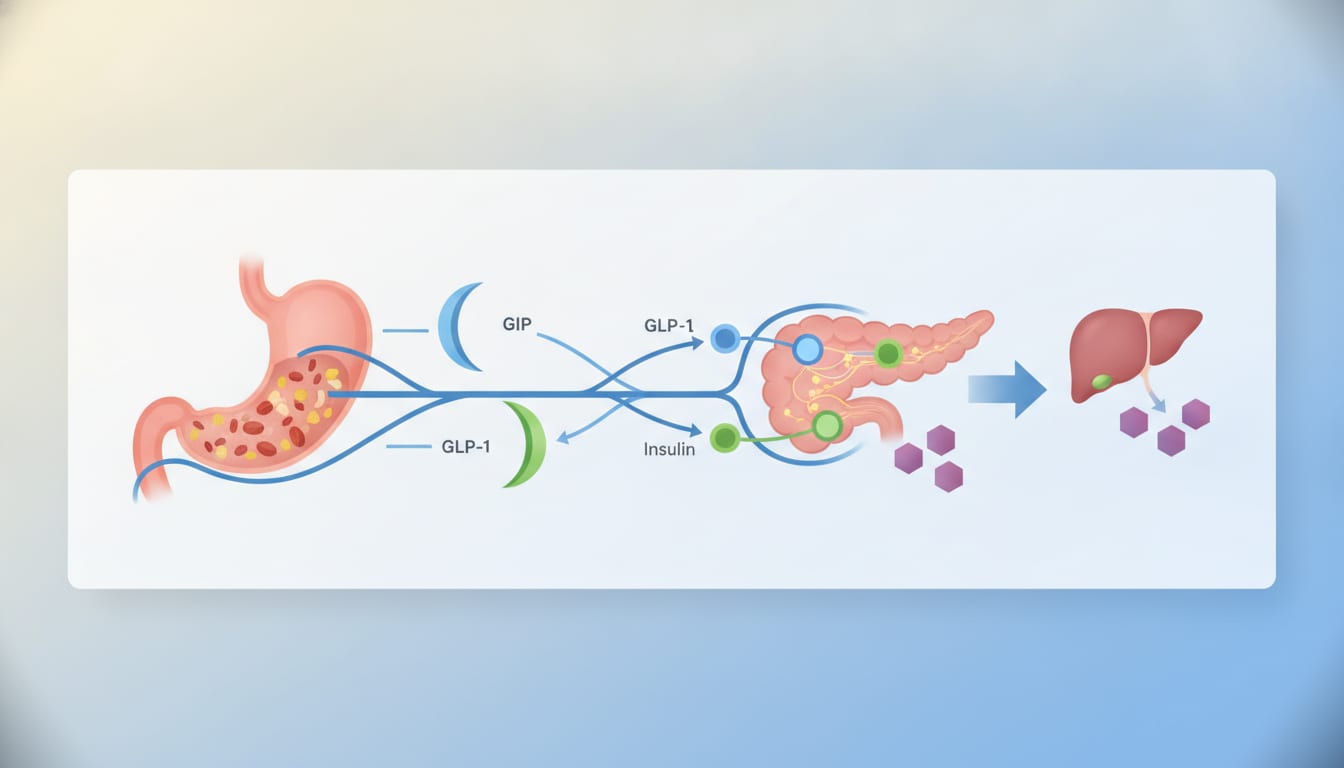
GLP-1 (glucagon-like peptide-1) is a hormone your small intestine releases when food arrives. It's one of the incretins, and incretins are the reason your body releases more insulin after you eat glucose than after the same amount of glucose delivered intravenously. In people with type 2 diabetes, that incretin response is blunted.
GLP-1 receptor agonists are engineered to mimic that signal with a much longer half-life than the natural hormone, which survives only a couple of minutes before enzymes chew it up.
What that signal does, mechanism by mechanism:
| Mechanism | What happens | Why it matters for insulin resistance |
|---|---|---|
| Glucose-dependent insulin secretion | Prompts the pancreas to release insulin, but mostly when blood glucose is elevated | Supports post-meal glucose handling without pushing insulin when glucose is already low |
| Glucagon suppression | Reduces glucagon output from alpha cells after meals | Glucagon tells the liver to dump stored glucose; excess glucagon is a known feature of type 2 diabetes |
| Slowed gastric emptying | Food leaves the stomach more gradually | Flattens the post-meal glucose spike, and drives a lot of the fullness people notice |
| Central appetite signaling | Acts on receptors in the hypothalamus and brainstem | Reduced energy intake, which over time reduces the metabolic load driving the resistance |
| Weight change (downstream) | Less visceral and ectopic fat | Excess fat in liver and muscle is strongly associated with impaired insulin signaling |
That third and fourth row are what most people mean by "appetite suppressant." The first two rows are pure endocrinology and have nothing to do with hunger at all.
The glucose-dependent part deserves emphasis. Because the insulin-secreting effect scales with blood glucose, GLP-1 receptor agonists used on their own carry low intrinsic hypoglycemia risk. That risk goes up meaningfully when they're combined with insulin or sulfonylureas, which is one of several reasons dose decisions belong to a prescribing clinician and not a forum thread.
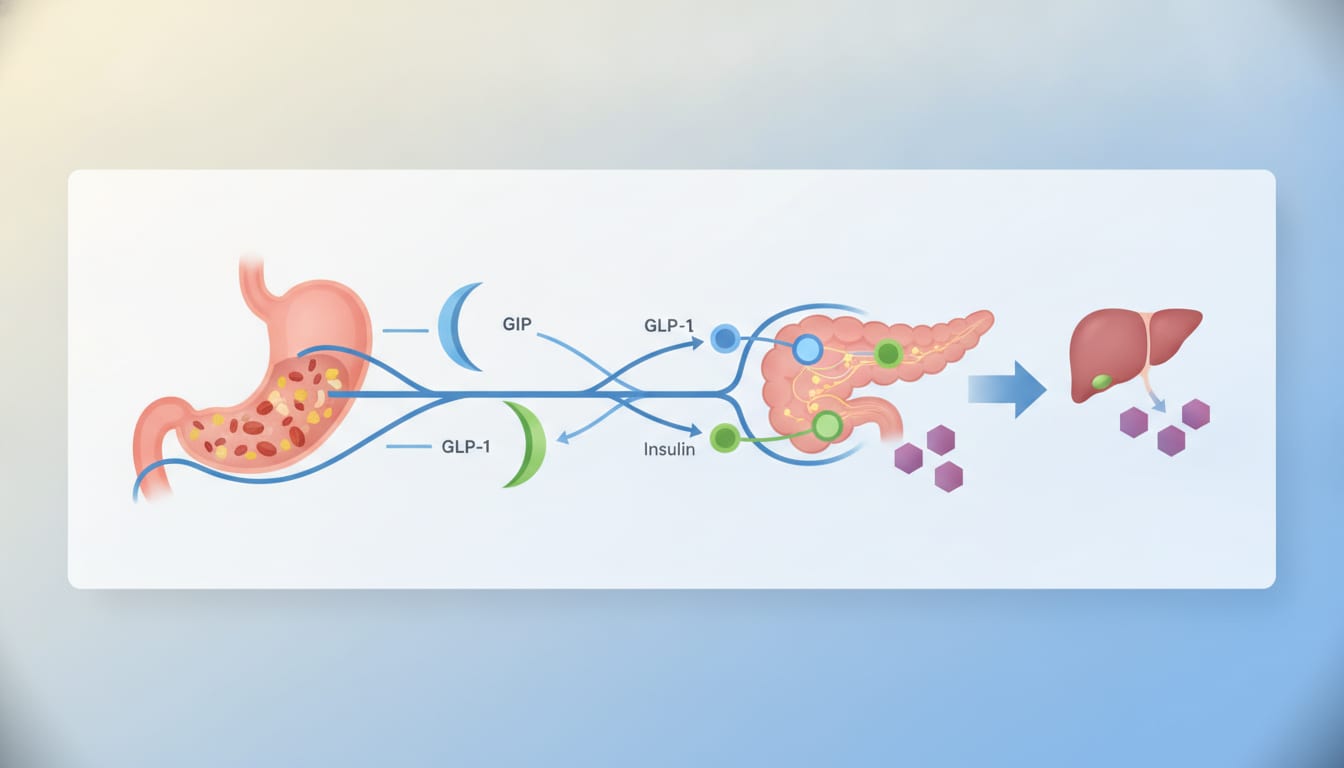
Tirzepatide adds a second receptor to the picture, GIP, the other major incretin. Dual agonism is why it behaves somewhat differently in trials.
What the evidence actually shows
Fair balance matters here, so I'll report findings as findings, not as promises about you.
- SURPASS-2 (NEJM, 2021) compared tirzepatide with semaglutide 1 mg in adults with type 2 diabetes over 40 weeks. Mean A1C reductions ranged from roughly 2.0 to 2.3 percentage points across tirzepatide doses versus about 1.9 for semaglutide.
- STEP 2 (The Lancet, 2021) studied semaglutide 2.4 mg in adults with type 2 diabetes and overweight or obesity, and reported a mean body weight change of about ‑9.6% versus ‑3.4% with placebo over 68 weeks.
- SELECT (NEJM, 2023) found a 20% relative reduction in major adverse cardiovascular events with semaglutide 2.4 mg in people with established cardiovascular disease and overweight or obesity, without diabetes.
Averages hide enormous individual variation. Trial populations are screened, supported, and monitored in ways daily life isn't. Some participants respond strongly, some modestly, some not at all, and discontinuation rates for side effects are real and reported in every one of those papers. Anyone who quotes you a trial average as your personal forecast is selling something.
Also worth knowing: the American Diabetes Association Standards of Care now position GLP-1 receptor agonists prominently in type 2 diabetes management, particularly where cardiovascular or kidney risk, or weight management, are part of the clinical picture. That's a guideline body, not an ad.
Two different lanes, and I'd rather be honest about which one we're in
This is the part most telehealth companies skip.
If you have diagnosed type 2 diabetes, your diabetes care belongs with the clinician managing it: your primary care physician or endocrinologist, the one ordering your A1C, adjusting your other medications, watching your kidney function and your eyes. We at TB2 Health run a medically supervised weight management program. That is a different lane, and for some people the two lanes intersect, which is exactly why our clinicians ask about your diabetes diagnosis, your current medications, and your recent labs during intake.
If you're insulin resistant or prediabetic and weight is part of the equation, that overlap gets more direct. But the honest framing is: we don't replace your diabetes care team. We coordinate around them.
I'd rather tell you that up front than have you discover it in week three.
How a physician-supervised protocol is actually built
People imagine a prescription arriving and that being the whole product. In practice, the medication is maybe a third of it. Here's the anatomy of treatment program design.
Patient assessment comes first
Before any clinical decision framework kicks in, there's a real intake: medical history, current medications, prior GLP-1 exposure, gallbladder and pancreatitis history, thyroid history, family history, pregnancy status and plans, mental health history, and labs where indicated. A1C and fasting glucose matter here. So does kidney function.
This is also where safety screening rules people out, and it should. A program that never declines anyone isn't screening.
Dose titration is the craft
Every GLP-1 protocol starts low. Not because a low dose is therapeutic, but because it lets the gut acclimate. Standard approaches step the dose up at intervals of roughly four weeks, with the clinician evaluating tolerance, side effects, and response before each increase.
Dosage optimization is not a race to the top of the label. Plenty of people stabilize at a mid-range dose and stay there. Others need slower steps, or a pause, or a step back down. When a patient tells me they white-knuckled through six weeks of nausea because they thought escalation was mandatory, that's a communication failure, not a heroic act.
Tell your clinician when it's bad. That's the whole point of supervision.
Ongoing GLP-1 medication management
Between titration decisions, the work is monitoring: side effect tracking, hydration and protein intake, interactions with other prescriptions, and whether the plan still fits your life. Maintenance planning starts earlier than most people expect.
Combination therapy, briefly
You'll see discussion of pairing GLP-1s with peptides or other adjunct treatments. Some combinations have clinical rationale, many do not, and research-use-only peptides are not approved for human use. Any combination decision is a prescribing clinician's call based on your specific situation, full stop.
Who should not take GLP-1 medications
Contraindications and cautions listed in FDA-approved labeling and clinical guidance include:
- Personal or family history of medullary thyroid carcinoma, or Multiple Endocrine Neoplasia syndrome type 2
- Known hypersensitivity to the drug or its components
- Pregnancy, planned pregnancy, or breastfeeding
- History of pancreatitis (requires careful clinical judgment)
- Gastroparesis or significant GI motility disorders
- Active or unstable diabetic retinopathy (warrants specific discussion, given signals seen in some trials)
- Type 1 diabetes, where these agents are not a substitute for insulin
Common side effects skew gastrointestinal: nausea, vomiting, diarrhea, constipation, reflux. Less common but serious concerns include pancreatitis and gallbladder disease. The FDA's drug safety resources are the primary reference.
One more transparency note: FDA-approved products and compounded formulations are not regulatory equivalents. Compounded drugs are not FDA-approved. If a formulation is on the table, ask what it is and where it's sourced. A program that won't answer that clearly is answering it clearly.
The thing medication doesn't do by itself
Improving insulin sensitivity has levers other than pharmacology, and they still work.
Resistance training builds muscle, and muscle is the largest site of glucose disposal in the body. Protein intake protects lean mass during weight loss, which protects that glucose disposal capacity. Sleep debt measurably worsens insulin sensitivity. And the original Diabetes Prevention Program found intensive lifestyle intervention reduced progression from prediabetes to type 2 diabetes by 58% over about three years, outperforming metformin in that trial.
So: lift something heavy twice a week. Eat protein first. Hydrate, especially during titration. Sleep like it's part of the protocol, because metabolically it is.
The clinician caveat, and I mean it
I'm a co-founder and a patient, not a physician. Nothing above is medical advice, and nothing above can account for your labs, your medications, your history, or your risk profile.
If you have type 2 diabetes, changes to your regimen need your prescribing clinician involved, not a blog post. If you're on insulin or a sulfonylurea, that conversation is non-negotiable. And if you're considering a supervised program, the right first move is a clinical conversation where someone qualified can tell you that GLP-1 therapy isn't appropriate for you, if that's the honest answer.
I'd rather we say no to the wrong patient than yes to everyone.
Where this goes next
Insulin resistance took years to develop. It responds to sustained, boring consistency more than it responds to intensity, and the people I've watched do best are the ones who stopped treating every plateau as a verdict.
If you're at the stage of understanding the mechanism rather than shopping for a fix, you're doing this in the right order. Keep going. Ask your clinician harder questions than you're comfortable asking. And when you're ready to talk to ours, we're at tb2.health, where the first step is a real clinical assessment rather than a checkout page.
You've got more leverage over this than the last decade probably made you believe.