You've probably been told some version of this: if you just ate less and moved more, your blood sugar would behave. Your labs would look better. The weight would come off and stay off.
I heard it too. For years.
Here's what nobody said out loud: insulin resistance is a communication failure inside your body, not a character audit. Your cells are getting the wrong volume of the wrong message at the wrong time. Willpower doesn't fix a signaling problem any more than shouting fixes a bad phone line.
That distinction matters, because it's exactly where GLP-1 medications enter the picture. Not as appetite police. As signaling molecules.
The short answer
Insulin resistance means your muscle, liver, and fat cells respond poorly to insulin, so your pancreas compensates by producing more of it. That state of chronically elevated insulin (hyperinsulinemia) makes fat storage easier, fat release harder, and hunger signaling noisier. Meanwhile, the gut hormones that normally tell your pancreas and brain "food has arrived, respond appropriately" work less effectively in people with type 2 diabetes and obesity.
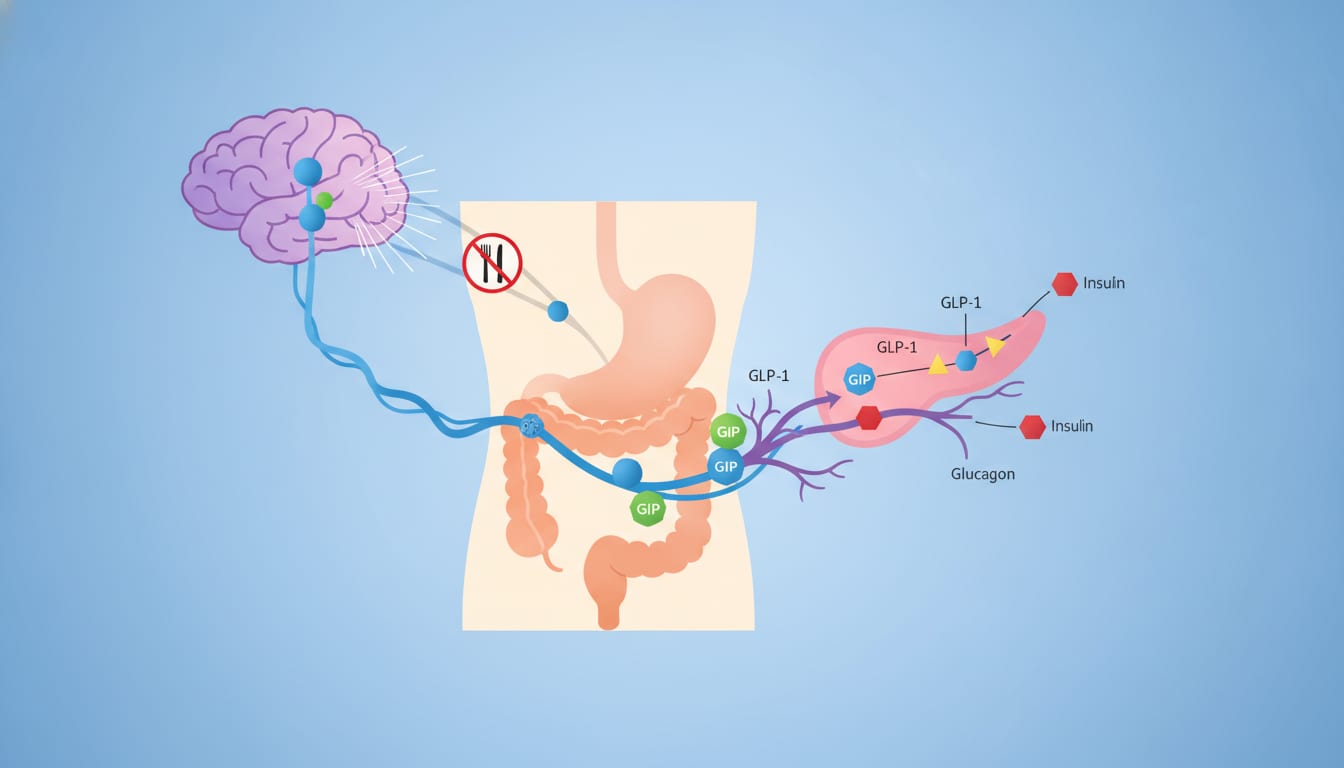
GLP-1 receptor agonists work on that second half of the equation. They restore a signal that's been dialed down, which affects insulin release in a glucose-dependent way, slows gastric emptying, and changes appetite regulation in the brain.
That's the mechanism. Everything below is the detail, including the parts the marketing usually skips.
I was patient zero at my own company
I co-founded tb2.health, and I was the first person on our protocol. Not because I'm brave. Because I'd already run the other experiments.
The 5 a.m. gym phase. The 1,400-calorie phase. The one where I logged every almond for fourteen months and watched my fasting glucose drift upward anyway. I had the discipline of someone training for something. My labs read like someone who'd given up.
That's the part that broke my "willpower" theory. Effort was never the missing variable.
I'm not a clinician. I'm the guy who read the trial data because it was personal first and professional second. But when I finally sat with a physician who looked at my fasting insulin instead of just my weight, the conversation changed. We weren't discussing my restraint. We were discussing my signaling.
What insulin resistance actually is
Insulin is a messenger. It knocks on a cell and says: glucose is in the bloodstream, open up and take it in.
In insulin resistance, the knock gets ignored. So the pancreas knocks harder, releasing more insulin to get the same glucose uptake. For years, sometimes decades, this compensation works. Blood sugar stays normal. Insulin does not.
The Centers for Disease Control and Prevention estimates roughly 98 million U.S. adults have prediabetes, and more than 8 in 10 don't know it (CDC, National Diabetes Statistics Report). That gap exists largely because standard panels measure glucose, not insulin. The compensation is invisible until it fails.
Where the fat goes matters more than how much there is
Yale's Gerald Shulman laid out the mechanism clearly in The New England Journal of Medicine: when fat accumulates inside muscle and liver cells rather than in fat tissue designed to store it, lipid metabolites interfere with insulin signaling directly (Shulman, 2014). Ectopic fat in the liver drives hepatic insulin resistance, which drives excess glucose output, which drives more insulin.
A loop. Not a moral failing.
Roy Taylor's work supporting the DiRECT trial showed the loop can run in reverse. Substantial weight reduction improved liver and pancreatic fat, and a meaningful share of participants achieved type 2 diabetes remission at 12 months (Lean et al., The Lancet, 2018). Biology, responding to changed inputs.
Why "eat less, move more" keeps failing at the signaling level
Restriction works. Then your body fights it.
Two studies should be required reading for anyone who's been told they lack discipline:
| Study | What it measured | What it found |
|---|---|---|
| Sumithran et al., NEJM, 2011 | Appetite hormones after a 10-week weight loss diet | Ghrelin (hunger) stayed elevated and satiety hormones stayed suppressed at 12 months, long after the diet ended |
| Fothergill et al., Obesity, 2016 | Resting metabolic rate in "Biggest Loser" contestants, 6 years later | Resting metabolic rate remained several hundred calories per day below predicted values |
Read those together. Hunger signaling stays turned up. Energy expenditure stays turned down. The defense of body weight is a coordinated hormonal response, and it doesn't care how motivated you are on a Tuesday.
This is why I get irritated by the willpower framing. It asks people to out-argue their own endocrine system using nothing but resolve.
Where GLP-1 fits into the signaling chain
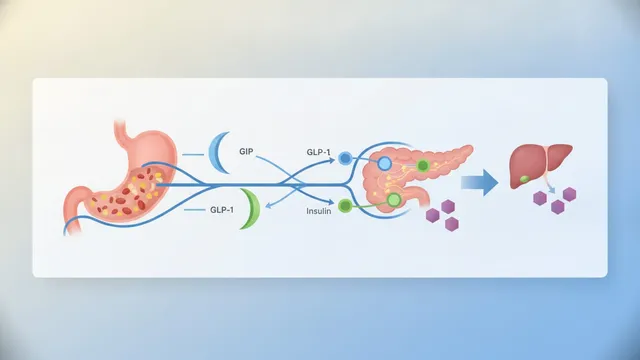
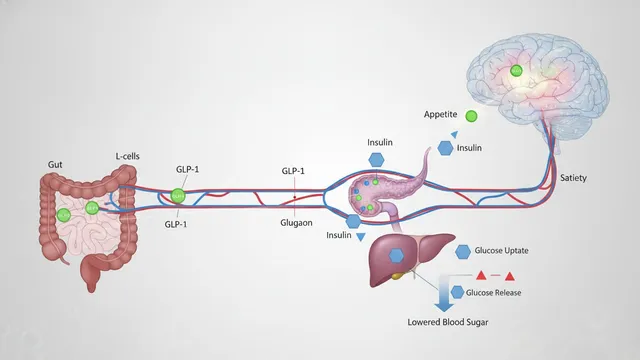
Glucagon-like peptide-1 is a hormone your own intestine makes. L-cells in the gut release it when you eat. It's part of the incretin system, which explains why an oral glucose load triggers more insulin release than the same glucose given intravenously.
In type 2 diabetes, that incretin effect is blunted. Nauck and Meier have documented this repeatedly: the response to GLP-1 is largely preserved even when overall incretin signaling is impaired, which is precisely why pharmacologic GLP-1 receptor agonism became a viable strategy (Nauck & Meier, Diabetes, Obesity and Metabolism).
Daniel Drucker's review in Cell Metabolism maps the actions well (Drucker, 2018). Simplified:
| Where it acts | What the signal does |
|---|---|
| Pancreatic beta cells | Enhances insulin secretion in a glucose-dependent way, so the effect scales with blood sugar rather than running unchecked |
| Alpha cells | Suppresses inappropriate glucagon release, reducing excess hepatic glucose output |
| Stomach | Slows gastric emptying, so nutrients arrive more gradually |
| Brain (hypothalamus, hindbrain) | Alters appetite and satiety signaling, reducing food intake and food preoccupation |
Notice what's absent from that list: willpower supplementation. The medication doesn't make you tougher. It changes the input your regulatory systems are working from.
Which is also why the "it's just an appetite suppressant" dismissal is wrong. Glucose-dependent insulin secretion and reduced hepatic glucose output are metabolic actions, independent of how much you eat that day.
What the evidence shows, and what it doesn't
Fair balance, because you deserve the whole picture.
In the STEP 1 trial, adults with overweight or obesity receiving once-weekly semaglutide 2.4 mg alongside lifestyle intervention had a mean body weight change of about 14.9% at 68 weeks, versus about 2.4% with placebo (Wilding et al., NEJM, 2021). In SURMOUNT-1, tirzepatide produced mean reductions of roughly 15% to 21% at 72 weeks depending on dose (Jastreboff et al., NEJM, 2022).
Now the parts that matter just as much:
- Those are averages. Individual response varies widely. Some participants responded minimally. Your result is not a trial mean.
- Gastrointestinal side effects were common. Nausea, vomiting, diarrhea, and constipation, mostly during dose escalation. A minority of participants discontinued because of adverse events.
- Stopping matters. In extension data following STEP 1, participants regained a substantial portion of lost weight after treatment withdrawal (Wilding et al., Diabetes, Obesity and Metabolism, 2022). This is consistent with a signaling model. Remove the signal, the old signaling returns.
- Serious risks exist. These medications carry contraindications and warnings, including a boxed warning regarding thyroid C-cell tumors in rodents, plus considerations around pancreatitis, gallbladder disease, and pregnancy.
Nobody should promise you a number. I won't. What the evidence supports is a mechanism with meaningful clinical effect when it's used under supervision, with dosing and monitoring handled properly.
Why the protocol, not just the prescription
Here's what I've learned watching this program run: the medication is maybe 40% of the outcome. The clinical structure around it is the rest.
Patient assessment comes first. A real history, current labs, medication list, and medical conditions. Insulin resistance shows up differently in someone with PCOS than in someone with fatty liver than in someone with long-standing type 2 diabetes. The clinical decision framework for choosing a protocol depends on those differences.
Safety screening is not a formality. Personal or family history of medullary thyroid carcinoma or MEN2 syndrome, prior pancreatitis, pregnancy or planned pregnancy, certain gastrointestinal conditions: these are reasons a clinician may say no, or not yet. A provider who doesn't ask is not protecting you.
Dose titration is where most of the tolerability lives. Escalating too fast is how people end up nauseated, dehydrated, and convinced the medication "doesn't work for them." Slow is often the right answer. Staying at a lower dose that you tolerate can be the right answer too.
Nutrition changes character on GLP-1 therapy. When appetite signaling drops, protein and micronutrient intake can quietly fall off a cliff. Prioritize protein. Hydrate, genuinely, more than feels necessary. Keep resistance training in the mix to support lean mass. Eat, even when the hunger cue never arrives.
That last point is the one I wish someone had hammered into me in month one. I spent a few weeks underfed and confused about why I felt flat. It wasn't the medication being aggressive. It was me forgetting that "not hungry" and "not needing food" are different states.
Talk to a clinician. Genuinely.
I write about this because I've lived it and because I read the literature obsessively. I am not your doctor, and I'm not qualified to tell you whether GLP-1 therapy belongs in your care plan.
Eligibility, dosing, interactions with your current medications, contraindications, and how this fits alongside management of diabetes, blood pressure, or thyroid conditions: those are clinical decisions that require a licensed provider who has reviewed your actual history. At tb2.health, that review happens before anything is prescribed, and our clinicians decline patients when it isn't appropriate. If a service tells you otherwise, that's information about the service.
Bring your last lab panel to the conversation. Ask about fasting insulin and HbA1c, not just weight. Ask what happens if you don't tolerate the first dose.
You were never the problem
If you've spent years assuming your metabolism reflects your discipline, I'd like you to put that down. It's heavy and it isn't accurate.
Insulin resistance is a signaling condition with identifiable mechanisms, measurable markers, and treatment approaches that act on those mechanisms directly. Understanding that doesn't hand you a result. It hands you a better question to ask your clinician, which is worth considerably more than another round of self-blame.
Plateaus will happen. Slow weeks will happen. Side effects during titration are common and usually manageable with the right adjustments. None of that means you've failed at something.
You're troubleshooting a system. That's a completely different job, and it's one you can actually do.
Paul Moss Co-founder, tb2.health
This article is educational and is not medical advice. GLP-1 receptor agonists are prescription medications with risks and contraindications. Individual results vary. Talk with a licensed clinician about whether any treatment is appropriate for you.