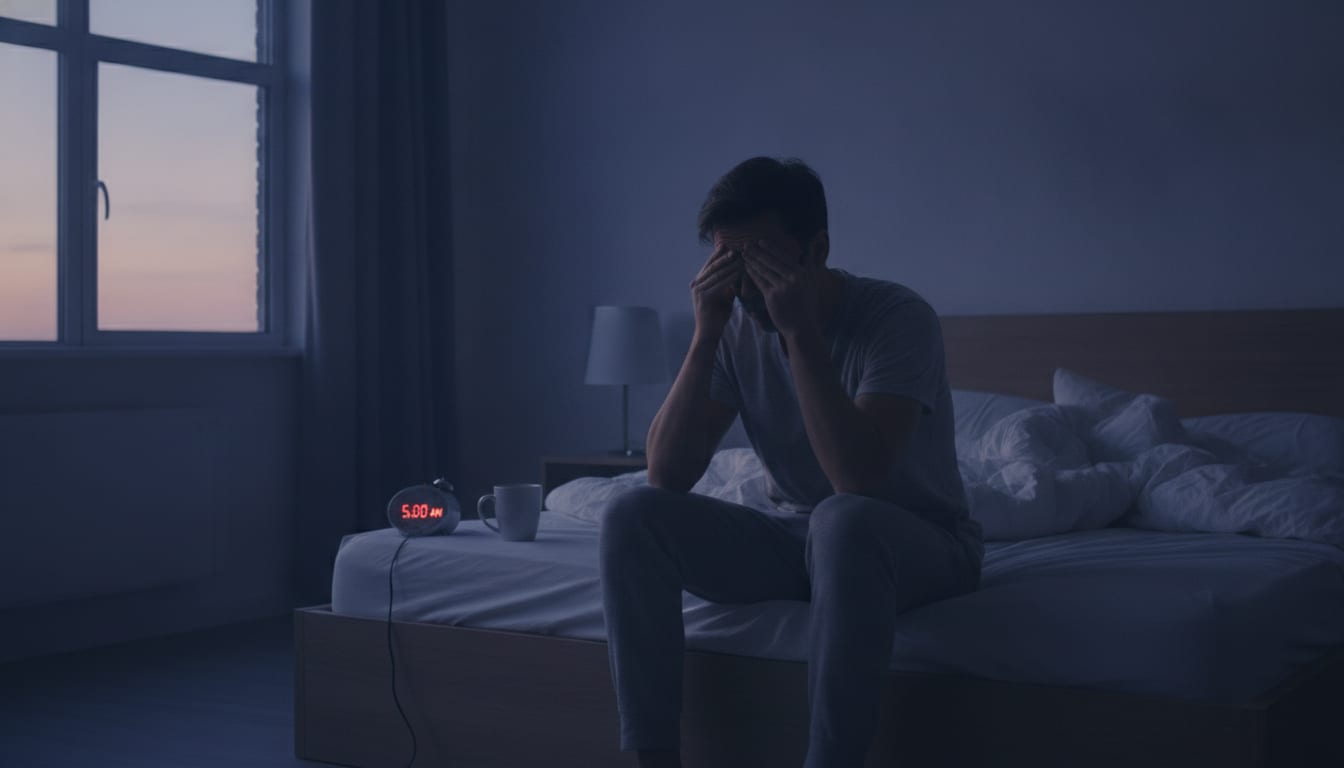
You sleep seven hours. Sometimes eight. You still wake up feeling like you got hit by a delivery truck, and by 2pm you're calculating whether anyone would notice if you napped in your car.
I know that feeling intimately. And I want to give you the honest answer up front: if you're carrying extra weight and you're exhausted all the time, that's rarely laziness, poor discipline, or "just getting older." Weight-related fatigue is usually several real physiological processes stacking on top of each other. Disrupted breathing during sleep. Insulin resistance. Low-grade inflammation. Nutrient deficiencies that hide in plain sight. Sometimes a thyroid or liver issue nobody has checked yet.
The good news in that sentence is the word processes. Processes can be measured. Measured things can be addressed.
My own version of this story
I'm a co-founder of tb2.health, and I was also our patient zero. Before any of this, my afternoons were a write-off. I'd get through a morning on caffeine and momentum, then hit a wall so predictable I scheduled around it. I blamed my calendar. I blamed my kids. I blamed my mattress, then bought a new mattress, which taught me an expensive lesson about blaming mattresses.
What I never did was ask whether my metabolism and my sleep were talking to each other. They were. Loudly.
I'm not a clinician. I run a telehealth company and I read a lot, which is a different job. But I've now sat in enough conversations with physicians and enough patients who said "I thought I was just tired" to know that fatigue is the most under-investigated symptom in metabolic health. People mention it last, almost apologetically, after their blood pressure and their knees.
Mention it first.
The main drivers of weight-related fatigue
Sleep-disordered breathing you don't know you have
This is the one I'd look at first, because it's common, measurable, and treatable.
Excess weight around the neck and abdomen narrows the upper airway and reduces lung volume, which makes the airway more likely to collapse during sleep. In the Wisconsin Sleep Cohort, a 10% weight gain predicted a roughly six-fold increase in the odds of developing moderate to severe sleep-disordered breathing (Peppard et al., JAMA, 2000). Population estimates suggest around 26% of US adults aged 30 to 70 have at least mild obstructive sleep apnea (Peppard et al., American Journal of Epidemiology, 2013).
Here's the part that matters for you: a large share of those cases are never diagnosed. You can spend years fragmenting your sleep hundreds of times a night, never fully remembering it, and simply conclude you're a tired person.
Ask about a sleep study. Home sleep apnea tests are now routine, and you don't have to snore like a chainsaw to qualify for one. The National Heart, Lung, and Blood Institute has a plain-language rundown of symptoms worth reading before your appointment.
Insulin resistance and the glucose rollercoaster
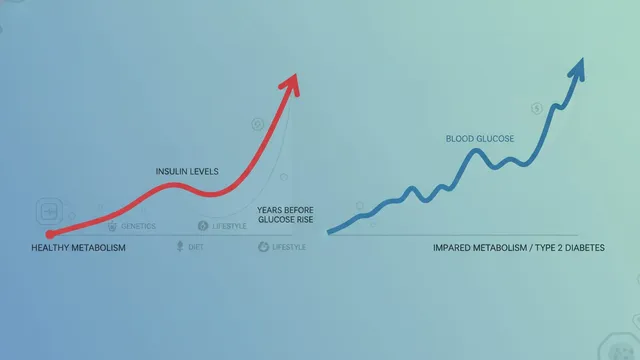
When cells respond less efficiently to insulin, the pancreas compensates by producing more of it. Blood sugar swings widen. You get the post-meal crash, the 3pm fog, the weird second wind at 10pm (NIDDK on insulin resistance and prediabetes).
Insulin resistance rarely travels alone. It clusters with elevated triglycerides, higher blood pressure, and central adiposity into what clinicians call metabolic syndrome. Fatigue isn't listed as a formal diagnostic criterion, which is exactly why it gets waved off in appointments. Patients feel it anyway.
There's also a feedback loop that deserves more attention than it gets. Short sleep changes appetite signaling. In a controlled study, restricting sleep to four hours a night lowered leptin, raised ghrelin, and increased self-reported hunger and appetite, particularly for calorie-dense foods (Spiegel et al., Annals of Internal Medicine, 2004). Poor sleep makes eating harder to manage. Harder eating patterns worsen metabolic health. Worse metabolic health worsens sleep. Round and round.
Fatty liver, quietly
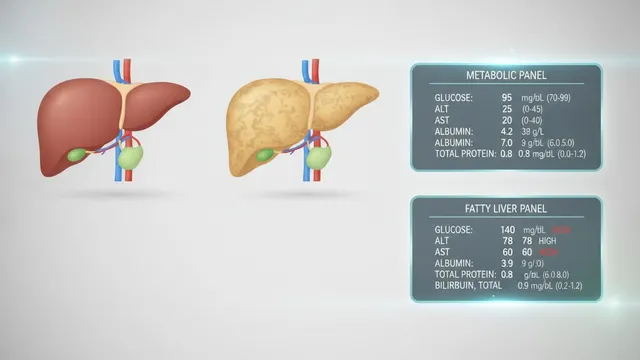
Non-alcoholic fatty liver disease (now often called metabolic dysfunction-associated steatotic liver disease) affects a startling share of adults, with recent global estimates approaching 38% (NIDDK). Most people have no idea they have it.
Fatigue is one of the most frequently reported symptoms in this population, and research has found it correlates with daytime sleepiness and autonomic dysfunction rather than tracking neatly with how advanced the liver disease is (Newton et al., Gut, 2008). Translation: you can feel wrecked with early-stage findings. Mildly elevated liver enzymes on a routine panel are worth a conversation, not a shrug.
Nutrient gaps that hide behind a normal-looking diet
Two patterns show up often enough in the literature to be worth asking about.
Iron. Obesity is associated with elevated hepcidin, a hormone that restricts iron absorption and traps iron in storage. The result can be functional iron deficiency even when total intake looks fine (Aigner et al., Nutrients, 2014). Ferritin and a full iron panel tell a story a basic CBC may miss.
Vitamin D. Circulating 25-hydroxyvitamin D tends to run lower with higher body fat, partly through volumetric dilution across a larger distribution space (Drincic et al., Obesity, 2012). The fatigue connection is debated, but the deficiency itself is common and easy to test.
B12 is worth checking too, especially if you take metformin or a proton pump inhibitor.
Thyroid, hormones, and the menopause overlap
Hypothyroidism causes fatigue, cold intolerance, and modest weight gain, and subclinical cases are more common than diagnosed ones (American Thyroid Association). A TSH with free T4 is a cheap answer to a nagging question.
For women in perimenopause and after, the picture layers. Declining estrogen changes fat distribution toward the abdomen, vasomotor symptoms fragment sleep, and insomnia complaints rise sharply during the transition (The Menopause Society). Fatigue in this stage is frequently attributed entirely to hormones, which means the sleep apnea risk that also rises after menopause goes unexamined.
Mood, deconditioning, and the effort tax
Depression and obesity have a well-documented bidirectional relationship. A meta-analysis found obesity raised the risk of later depression, and depression raised the risk of later obesity (Luppino et al., Archives of General Psychiatry, 2010). Fatigue and anhedonia are core depressive symptoms, not character flaws.
Then there's the mechanical reality. Lower cardiorespiratory fitness means every ordinary task, stairs, groceries, a long hallway at the airport, consumes a bigger slice of your capacity. You're paying an effort tax on daily life. That tax feels exactly like fatigue because it is fatigue.
A quick pattern guide
Fatigue has a texture. The texture is a clue. Bring this to your appointment.
| What it feels like | Worth asking about | Reasonable first step |
|---|---|---|
| Unrefreshing sleep, morning headache, witnessed pauses in breathing, nighttime bathroom trips | Sleep-disordered breathing | Home sleep apnea test referral |
| Crash 60 to 120 minutes after meals, shaky or irritable between meals | Insulin resistance, glucose variability | A1c, fasting glucose, sometimes fasting insulin |
| Dull all-day heaviness, right-sided abdominal discomfort | Fatty liver disease | Liver enzymes, imaging if indicated |
| Breathlessness with mild exertion, pale skin, cold hands | Iron deficiency or anemia | CBC plus ferritin and iron studies |
| Cold intolerance, dry skin, constipation, hair thinning | Thyroid function | TSH with free T4 |
| Night sweats, 3am wakeups, new anxiety, cycle changes | Perimenopause or menopause transition | Symptom-based clinical assessment |
| Low motivation, loss of interest, fatigue worst in the morning | Depression | PHQ-9 or equivalent screen |
| Puffiness, reduced urine output, fatigue with elevated blood pressure | Kidney function | Creatinine, eGFR, urine albumin |
No single line here is a diagnosis. Several of them can be true at once, which is the usual case.
What I'd actually do this month
Start with information, not willpower.
Book a physical and ask explicitly for fatigue to be worked up as a symptom. Say the word "fatigue" out loud. Request a panel that covers CBC with ferritin, TSH with free T4, A1c, a comprehensive metabolic panel including liver enzymes, a lipid panel, vitamin D, and B12. Ask directly whether a sleep study is warranted.
Track two weeks of sleep. Bedtime, wake time, how many times you woke, how you felt at 3pm on a scale of one to ten. Patterns you can see are patterns you can discuss.
Protect the boring basics while you wait for answers. Anchor protein at breakfast so your morning isn't built on a glucose spike. Walk after your largest meal, ten minutes is plenty. Hydrate. Move caffeine earlier, because a 4pm coffee has a long tail. Get daylight in your eyes within an hour of waking.
None of that replaces a diagnosis. All of it helps you tolerate the wait.
Where clinical supervision earns its keep
Here's my honest caveat, and I mean it as a promise rather than a legal footnote: everything above is background reading, not medical advice. I can tell you what the literature says. I cannot tell you which of these applies to you, and neither can an algorithm or a forum thread.
Fatigue overlaps with conditions that range from trivially fixable to genuinely serious. Sleep apnea raises cardiovascular risk. Untreated thyroid disease has consequences. Anemia can have causes that need investigating on their own. That's why we at TB2 Health build every program around physician oversight and real lab work rather than self-assessment, and why our clinicians treat metabolic health as a connected system, including cardiometabolic and kidney health, liver findings, and sleep. If your fatigue and your metabolic labs look tangled together, get a clinician who will look at both in the same visit.
Talk to your own physician or a licensed provider before acting on anything in this article. If you're already working with a care team, bring them the pattern table.
You are allowed to stop negotiating with your own exhaustion
I spent years assuming tiredness was the rent I paid for being a busy adult. It wasn't. It was information I kept ignoring because nobody had ever told me fatigue was measurable.
So take the first step this week, not eventually. Ask for the labs. Ask about the sleep study. Describe the texture of your tiredness to someone qualified to interpret it. You might find one fixable thing. You might find four small ones that add up. Either way, you stop guessing, and guessing is the most tiring part.
Your afternoons can look different than they do right now. Go find out why they don't.
Paul Moss Co-founder, tb2.health
This article is for educational purposes and is not medical advice, diagnosis, or treatment. Individual results and experiences vary. Always consult a licensed healthcare professional about your specific situation.