You got a routine ultrasound for something unrelated. Gallstones, maybe. Abdominal pain that turned out to be nothing. And buried in the report was a phrase you had to read twice: hepatic steatosis. Or your ALT came back a little high and your doctor said "fatty liver, we'll watch it," and moved on to your blood pressure.
That was probably the whole conversation. Thirty seconds.
I'm Paul. I co-founded tb2.health, and I was also its patient zero, which is a polite way of saying I spent years with a metabolic panel I didn't want to look at. I'm not a clinician. But I've read more hepatology guidance than any non-doctor reasonably should, and I've sat with a lot of people who got that same thirty-second explanation and went home confused. So let me give you the longer version.
The short answer
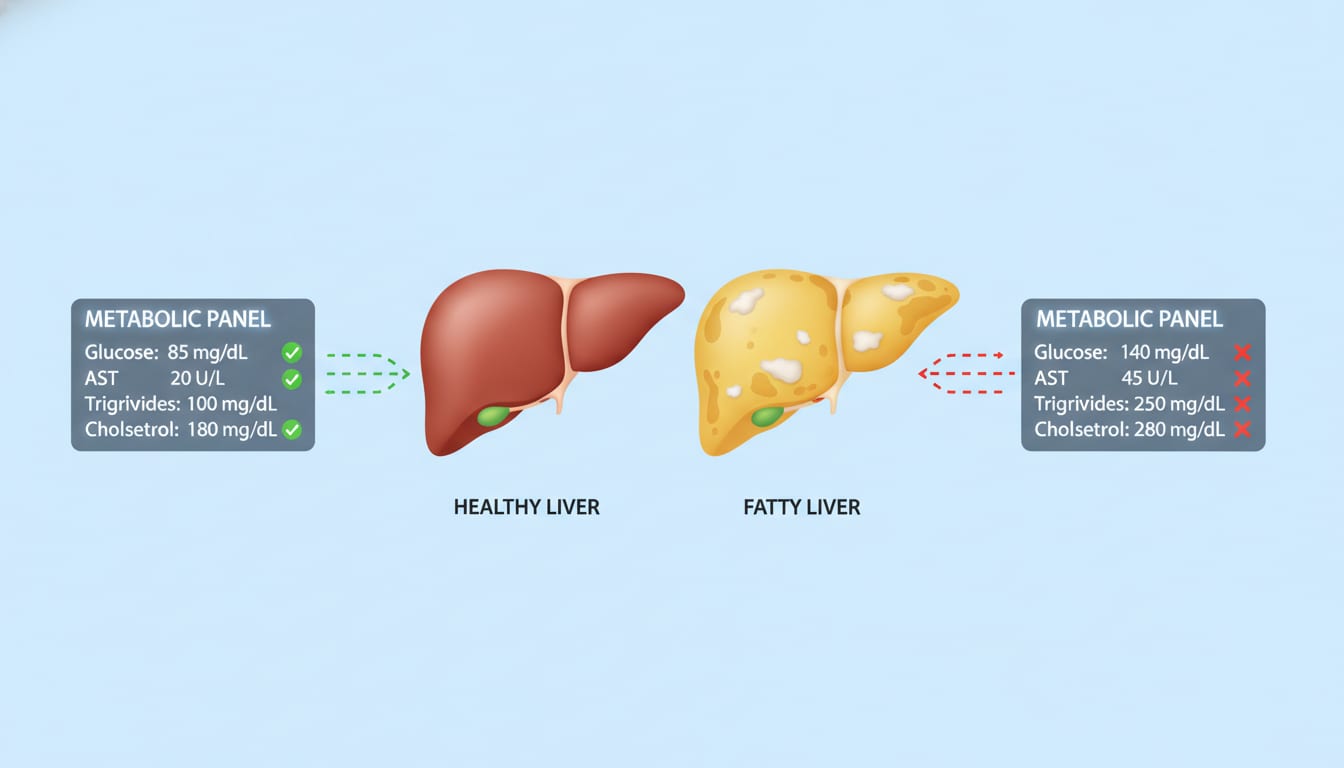
Fatty liver is not primarily a liver disease. It's a metabolic condition that happens to show up in your liver first.
When your body is handling more energy than it can comfortably store or burn, fat starts accumulating in places it shouldn't. The liver is one of the earliest and most visible of those places. So the finding on your ultrasound is less "your liver is broken" and more "your metabolism has been leaving receipts, and the liver is where they piled up."
That reframe matters. Because it means the question isn't just "how do I fix my liver." It's "what is driving this, and is that same thing doing damage elsewhere?"
Usually, it is.
Why the name keeps changing
You'll see several acronyms for the same general thing, and the churn is confusing.
NAFLD (non-alcoholic fatty liver disease) was the standard term for decades. It was always a slightly odd name, defining a condition by what it isn't.
In 2023, a multi-society Delphi consensus published in Hepatology replaced it with MASLD: metabolic dysfunction-associated steatotic liver disease. The new name does two useful things. It names the actual driver (metabolic dysfunction) instead of the exclusion (not alcohol), and it drops language patients found stigmatizing.
Critically, MASLD requires a positive finding. You need fat in the liver plus at least one of five cardiometabolic criteria: elevated waist circumference or BMI, elevated fasting glucose or type 2 diabetes, elevated blood pressure, elevated triglycerides, or low HDL. Most people who get the diagnosis meet two or three of them without knowing it.
MASH (metabolic dysfunction-associated steatohepatitis) is the newer name for NASH, the inflamed version. More on that below.
If your chart says NAFLD and your friend's says MASLD, you're talking about the same territory. Your doctor's EMR just updated at a different pace.
How fat gets into a liver in the first place
Here's the part nobody explains in thirty seconds.
Insulin resistance is the engine
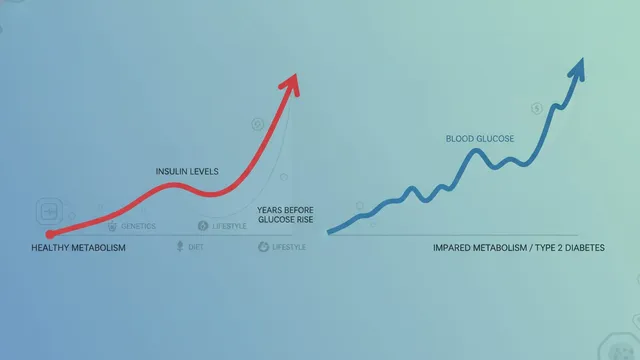
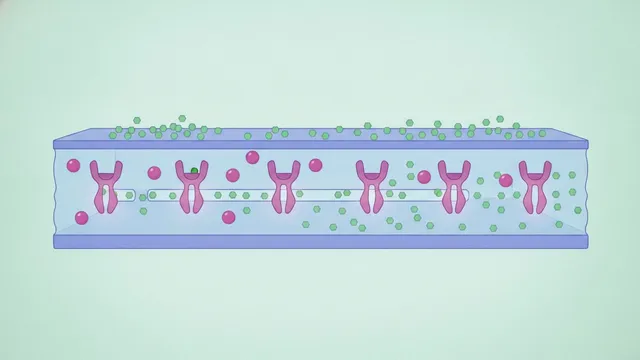
When cells stop responding well to insulin, your pancreas compensates by producing more of it. High circulating insulin does a few things at once. It suppresses fat breakdown in adipose tissue, so free fatty acids keep flowing toward the liver. And it ramps up de novo lipogenesis, the liver's own process of manufacturing fat from carbohydrate.
So the liver is receiving more fat and making more fat, while its ability to export and oxidize that fat lags behind. Fat accumulates in the hepatocytes. Once more than roughly 5% of liver cells contain fat droplets, you meet the imaging threshold for steatosis.
This is why fatty liver travels in a pack with type 2 diabetes, high blood pressure, PCOS, sleep apnea, and the cluster we call metabolic syndrome. They're branches off the same trunk. Studies consistently find steatotic liver disease in a majority of people with type 2 diabetes, often cited around 65 to 70%.
Two objections I hear constantly
"But I barely drink." Right. That's the point. Alcohol-related liver disease and MASLD can look nearly identical on imaging, which is why the diagnostic criteria explicitly account for alcohol intake. You can have a liver full of fat having never touched a drink. Fructose-sweetened beverages, by the way, are metabolized by the liver in a way that feeds de novo lipogenesis directly, which is one reason sugary drinks get singled out in nearly every guideline.
"But I'm not that heavy." Roughly 10 to 20% of cases occur in people with a normal BMI, sometimes called lean MASLD. BMI is a crude proxy. What matters more is where fat is stored and how insulin-sensitive you are. A person with modest visceral fat and poor insulin sensitivity can absolutely have a fatty liver while someone heavier does not.
The staging ladder, and where most people actually sit
Fatty liver is not one thing. It's a spectrum, and the spectrum matters far more than the diagnosis itself.
| Stage | What's happening | Reversibility |
|---|---|---|
| Simple steatosis (MASL) | Fat in liver cells, little or no inflammation | Generally reversible with metabolic improvement |
| MASH (steatohepatitis) | Fat plus inflammation and liver cell injury | Often improvable; the stage where damage accrues |
| Fibrosis F1-F2 | Scar tissue beginning to form | Regression documented in clinical studies |
| Fibrosis F3 (advanced) | Bridging fibrosis, significant architectural change | Harder, but not a dead end |
| F4 (cirrhosis) | Extensive scarring, impaired function | Managed, with complications monitored closely |
Most people with fatty liver stay in the first bucket and never progress meaningfully. A subset progress to MASH, and a smaller subset to advanced fibrosis. Fibrosis stage is the single strongest predictor of liver-related outcomes, which is why hepatologists care far more about your fibrosis risk than about how bright your liver looked on ultrasound.
So the useful question to bring to your next appointment is not "do I have fatty liver." You already know that. It's: "what's my fibrosis risk, and how are we assessing it?"
How it gets found, and why standard labs miss it
Fatty liver is quiet. No pain, no jaundice, usually nothing. Fatigue and a vague right-upper-quadrant heaviness are the most commonly reported symptoms, and both are nonspecific enough to be useless as a warning system.
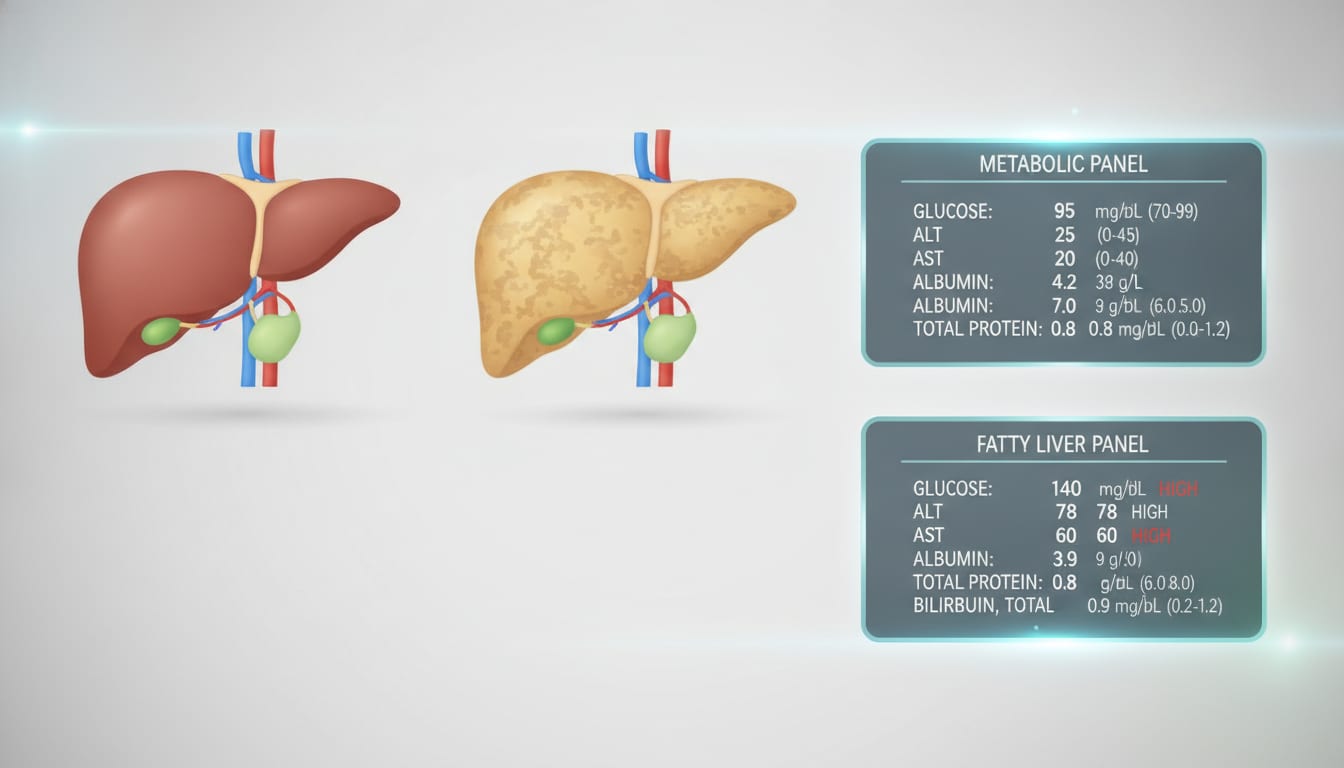
A meaningful share of people with MASLD, including some with advanced fibrosis, have normal ALT and AST. A normal liver panel does not rule this out. That surprises people, and it should, because "your liver enzymes are fine" gets used as an all-clear far too often.
What guidelines actually recommend is risk stratification. The AGA's clinical care pathway and the AASLD practice guidance both center on FIB-4, a simple score calculated from your age, AST, ALT, and platelet count. You already have those numbers in most routine bloodwork.
| FIB-4 score | Interpretation | Typical next step |
|---|---|---|
| Below 1.3 | Low risk of advanced fibrosis | Recheck periodically; address metabolic drivers |
| 1.3 to 2.67 | Indeterminate | Second-line test, often elastography (FibroScan) or ELF |
| Above 2.67 | High risk | Hepatology referral |
(Over age 65, a higher lower-bound cutoff around 2.0 is commonly used to reduce false positives.)
Ask for it. Free online FIB-4 calculators exist, and the NIDDK overview of NAFLD is a solid plain-language primer if you want to walk in prepared. Transient elastography measures liver stiffness non-invasively and has largely replaced biopsy as the routine next step.
What the evidence says actually changes the liver
This is the part I find genuinely encouraging, because the liver is one of the more forgiving organs in the body.
The most cited work here is a prospective study by Vilar-Gomez and colleagues published in Gastroenterology in 2015, which followed 261 patients with biopsy-proven NASH through 52 weeks of structured lifestyle change. The findings were dose-dependent:
| Body weight reduction | What was observed in the study cohort |
|---|---|
| 3-5% | Improvement in hepatic steatosis |
| 7-10% | Resolution of steatohepatitis in a majority of those who achieved it |
| 10% or more | Fibrosis regression in roughly 45% of that group |
Two honest caveats. First, those are trial results in people who achieved specific thresholds, not a prediction for any individual. Only about 10% of that cohort hit the 10% mark. Second, "lifestyle change" in a monitored study is a different animal from going it alone on a Tuesday in February.
But the direction is clear and it's been replicated: metabolic improvement improves the liver. That's not wishful thinking, it's one of the better-supported relationships in hepatology.
Other evidence-backed levers, briefly:
Mediterranean-pattern eating has the strongest guideline support of any specific dietary pattern for MASLD, largely for reducing liver fat independent of calorie restriction.
Exercise reduces hepatic fat even when body weight doesn't change much. Both aerobic and resistance training show benefit. The commonly cited target is 150 minutes per week of moderate activity, and consistency beats intensity here.
Cutting sugar-sweetened beverages is the single highest-yield dietary swap for most people, for the fructose reason above.
Coffee is associated with lower fibrosis risk in multiple observational studies. Not a treatment. But a nice thing to know.
Treating the neighbors matters. Untreated obstructive sleep apnea, poorly controlled type 2 diabetes, and PCOS all worsen the metabolic picture that's feeding your liver. Addressing one often helps the others.
On medication: in March 2024, the FDA granted accelerated approval to resmetirom for adults with noncirrhotic MASH and moderate-to-advanced fibrosis, the first drug approved specifically for this indication. It's a prescription therapy with defined eligibility criteria, not a general fatty-liver treatment, and that's a conversation for a hepatologist.
The risk most people don't hear about
Here's the thing that surprised me most when I started reading this literature.
The leading cause of death in people with MASLD is cardiovascular disease, not liver disease. Heart attacks and strokes outrank cirrhosis by a wide margin in long-term cohort data.
Which circles back to the opening point. A fatty liver is a signal about your whole cardiometabolic system. If you treat it as a liver problem you'll miss the larger picture, and the larger picture is where most of the actual risk sits. Blood pressure, lipids, glucose, sleep, visceral fat. Those are all part of the same conversation.
Please talk to an actual clinician about this
I'll say it plainly: I'm not a doctor, and nothing above is a diagnosis or a plan for you specifically.
Fatty liver sits in a category where self-management can genuinely help and self-diagnosis can genuinely mislead. Elevated liver enzymes have a long differential list that includes viral hepatitis, autoimmune conditions, medication effects, and thyroid disease. Imaging that looks like steatosis can be something else. And if you do have advanced fibrosis, you need surveillance you cannot arrange on your own.
Bring your FIB-4 question to your primary care physician. If the number is indeterminate or high, push for elastography or a hepatology referral. That's the path the guidelines lay out, and it's reasonable to ask for it directly.
At TB2 Health, our clinicians work with patients whose metabolic picture spans exactly this territory, and when liver findings come up, the first move is always coordinating with the physicians managing the broader workup, not around them. If insulin resistance turns out to be the engine behind your results, a physician-supervised metabolic program is one of several things worth discussing with a clinician who knows your full history.
You caught this early, and that counts
Most liver disease announces itself late. Yours announced itself on a routine scan, in a sentence your doctor almost said in passing, while you still have enormous room to change the trajectory. That's not a small thing. That's the best version of this diagnosis.
The liver regenerates. The research on fibrosis regression is real. And the changes that help your liver are, almost without exception, the same changes that help your heart, your blood sugar, and how you feel at 3pm.
Start with one question at your next appointment: what's my FIB-4?
Everything else follows from knowing where you actually stand.
Paul Moss Co-founder, TB2 Health
This article is educational and is not medical advice. Fatty liver disease requires evaluation and monitoring by a licensed clinician. Do not start, stop, or change any treatment based on what you read here.