
You already know the number on the scale. You've probably known it for years. What you may not know is what the waiting costs.
I want to talk about that, because almost nobody does. The conversation around metabolic health is usually framed as a choice between doing something and doing nothing, as if doing nothing is the neutral option. The safe one. The one with no downside except mild disappointment in yourself.
It isn't neutral. Metabolic dysfunction is progressive. While you're deciding, the underlying biology keeps moving, and it generally moves in one direction.
That's the core of this piece: standing still and holding steady are not the same thing.

Why I think about this constantly
I'm the co-founder of tb2.health, and I was also our first patient. Patient zero. Not a flattering title, but an honest one.
Before that, I spent close to a decade in the holding pattern. I'd lose fifteen pounds, feel proud, regain twenty, feel ashamed, and tell myself I'd get serious in January. My bloodwork drifted in a way my doctor described as "nothing alarming yet." That word, yet, did a lot of heavy lifting. I heard it as permission. It was actually a timer.
I'm not a clinician. I can't tell you what's happening inside your body, and I won't pretend to. But I can tell you what I wish someone had explained to me at 34, which is that the years I spent "not ready" were not free years. They were paid for. I just didn't get the invoice until later.
The short version: dysfunction compounds
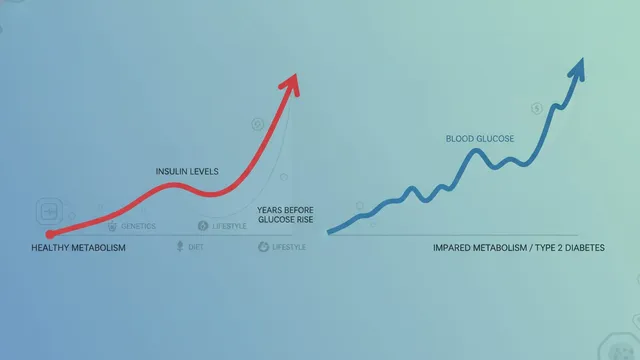
Insulin resistance doesn't plateau politely while you make up your mind. It recruits other systems.
Here's the chain most people never see laid out in one place:
Insulin resistance comes first, often by a decade or more. Your pancreas compensates by producing more insulin, and for years your glucose readings look fine because the compensation is working. By the time fasting glucose actually rises, significant beta-cell capacity is already gone. The landmark UKPDS research estimated that people were operating at roughly half their beta-cell function at the point of type 2 diabetes diagnosis. The disease was years old before it had a name.
Then prediabetes. The CDC estimates 97.6 million U.S. adults have prediabetes, and more than 80% don't know it. Roughly 5% to 10% of them convert to type 2 diabetes each year. That is the actual cost of a year spent waiting, expressed as a probability.
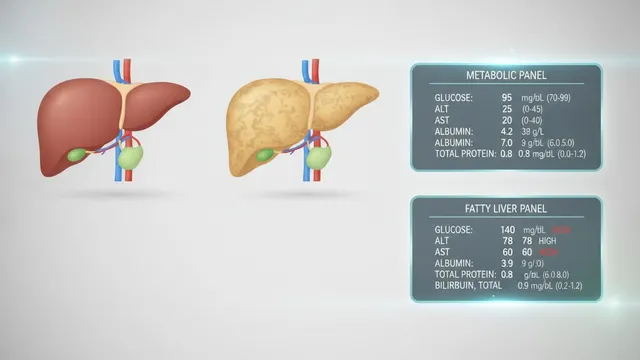
Then the liver. When muscle and fat cells stop absorbing glucose efficiently, the overflow gets routed to the liver and stored as fat. Metabolic dysfunction-associated steatotic liver disease, renamed from NAFLD in the 2023 multi-society consensus, now affects roughly a quarter to a third of adults. Most feel nothing. Fatty liver has no symptoms until it has advanced, and research published in Gastroenterology found that fibrosis stage, not inflammation, is the strongest predictor of liver-related mortality. Fibrosis accumulates silently.
Then pressure and kidneys. Nearly half of U.S. adults have hypertension, and only about one in four has it controlled. The kidneys are downstream of both pressure and glucose. The CDC estimates about 35.5 million adults have chronic kidney disease, and roughly 9 in 10 don't know it. Kidney damage is largely irreversible. You don't get that tissue back.
And overlapping all of it, sleep. Obstructive sleep apnea fragments sleep hundreds of times a night, driving sympathetic activation, glucose intolerance, and daytime exhaustion that makes every other change harder. The American Academy of Sleep Medicine has estimated that roughly 23.5 million U.S. adults with OSA are undiagnosed. Untreated sleep apnea makes insulin resistance worse, which makes weight harder to manage, which makes apnea worse. The loop closes on itself.
None of these are separate problems. They are the same problem wearing different coats.
The conditions where the rules are different
Some readers are already fighting uphill before the first decision gets made, and I don't want to flatten that.
PCOS
Polycystic ovary syndrome affects somewhere between 6% and 13% of reproductive-age women, and the WHO estimates up to 70% go undiagnosed. Insulin resistance is a central feature for a large share of those women, often independent of body size. If you've been told to "just eat less" while your labs show hyperinsulinemia, you weren't failing at discipline. You were being handed the wrong instruction set.
Perimenopause and menopause
The SWAN cohort and related research show that the menopause transition involves a redistribution of fat toward the visceral compartment and a decline in resting metabolic rate that is not fully explained by aging alone. Visceral fat is the metabolically active kind, the kind that correlates with cardiometabolic risk. Women routinely describe doing exactly what used to work and watching it stop working. That observation is accurate. It isn't a motivation problem.
Cognitive health, the long tail
This one gets the least airtime and deserves more. The 2024 Lancet Commission on dementia identified 14 modifiable risk factors accounting for around 45% of dementia cases worldwide. Midlife obesity, hypertension, diabetes, and physical inactivity are on that list. Midlife. Meaning the exposure window that matters most is roughly the decade people spend telling themselves they'll deal with it later.
The money nobody adds up
Staying stuck has a line-item cost, and it's larger than most people assume because it arrives in fragments rather than as a single bill.
The American Diabetes Association's economic analysis of diabetes put the total U.S. cost at $412.9 billion in 2022. Per person, people with diagnosed diabetes averaged about $19,736 in annual medical expenditures, of which roughly $12,022 was attributable to diabetes itself. That's approximately 2.6 times what comparable people without diabetes spend.
| What goes untreated | What tends to follow | Documented cost signal |
|---|---|---|
| Prediabetes | Type 2 diabetes at ~5-10% per year | ~$12,022/year in excess medical costs once diagnosed (ADA, 2022 data) |
| Fatty liver (MASLD) | Fibrosis, cirrhosis, rising transplant demand | Largely asymptomatic until advanced; fibrosis stage drives mortality risk |
| Untreated sleep apnea | Hypertension, glucose intolerance, accident risk | AASM estimated $149.6B annual cost of undiagnosed OSA in the U.S. |
| Uncontrolled hypertension | Kidney disease, cardiovascular events | Only ~1 in 4 U.S. adults with hypertension has it controlled |
| Chronic kidney disease | Dialysis, transplant | ~9 in 10 adults with CKD are unaware they have it |
And that table only captures the medical side. It doesn't capture the sick days, the knee you stopped using, the gym membership billed monthly against a plan you abandoned in March, or the quiet premium you pay in sleep quality and energy every single day.
I once added up what I'd spent across eleven years on programs, apps, meal kits, supplements, and one genuinely absurd piece of home equipment. It cleared five figures. Not one of those purchases was supervised by anyone who had seen my labs.
The cost that never appears in a chart
This is the part that got me, honestly, more than the bloodwork.
It's the vacation photo you deleted. The flight where you thought about the seatbelt before you thought about the destination. The job you didn't apply for because the interview involved a conference you'd have to be seen at. The kid who asked you to swim.
I'm not saying this to make you feel worse. You have almost certainly done enough of that already, and shame has a terrible track record as a behavior change strategy. I'm saying it because these costs are real and they are rarely counted, and when you're weighing "do something" against "wait," leaving them off the ledger distorts the math.
Staying stuck feels free because its costs are paid in installments. Small ones. Daily ones.
"I'll deal with it when it gets bad" is the expensive plan
I understand the logic. Act when the problem is undeniable, conserve effort until then. It feels responsible.
The problem is that metabolic disease crosses thresholds, not slopes. Beta-cell loss, liver fibrosis, kidney nephron loss, and vascular damage are all substantially harder to reverse than to prevent. The window where intervention does the most work is the window where you feel the least urgency.
The counter-evidence is encouraging, though. The Diabetes Prevention Program, published in the New England Journal of Medicine, found that intensive lifestyle intervention reduced the incidence of type 2 diabetes by 58% over an average of about three years in high-risk adults. The DiRECT trial found that nearly half of participants in a structured weight management program achieved type 2 diabetes remission at one year. Earlier intervention worked better than later intervention in both.
Direction is modifiable. Timing matters.
Start with knowing, not with fixing
If you take one action from this article, make it this one: get a current picture. Not a weigh-in. A picture.
Ask your clinician about these:
| Marker | What it reflects | Common thresholds to discuss |
|---|---|---|
| A1c | Average glucose over ~3 months | 5.7-6.4% prediabetes; 6.5%+ diabetes |
| Fasting glucose | Current glucose regulation | 100-125 mg/dL prediabetes |
| Fasting insulin | Compensation happening before glucose rises | Often abnormal years earlier; ask whether it's appropriate for you |
| ALT / AST | Possible liver fat or inflammation | Mildly elevated ALT is a common early signal |
| FIB-4 score | Calculated fibrosis risk from routine labs | <1.3 generally low risk; higher warrants follow-up |
| Lipid panel | Triglycerides and HDL track insulin resistance closely | Triglycerides ≥150; HDL <40 (men) / <50 (women) |
| Blood pressure | Vascular and kidney strain | ≥130/80 is stage 1 under 2017 ACC/AHA guidance |
| Waist circumference | Visceral fat proxy | >40 in (men) / >35 in (women) in metabolic syndrome criteria |
| Sleep screening | Apnea risk | STOP-BANG or similar questionnaire, then a sleep study if indicated |
Bring the list. Ask what your trajectory looks like, not just whether you're currently "fine." Those are different questions and they get different answers.
A necessary caveat, and I mean it sincerely. I'm the co-founder of a telehealth company, not a physician. Nothing here is a diagnosis, and no article is a substitute for someone who has your history, your labs, and a license. Reference ranges vary, individual context changes interpretation, and some of these markers mean different things depending on medications you're already taking. Take this to a clinician and let them do their job.
What I can say is that at tb2.health we built a physician-supervised program because I'd spent a decade trying the unsupervised version and it cost me more than it ever returned. There are multiple legitimate paths forward depending on what your evaluation shows, and the right one is a clinical decision, not a marketing one. If you want to understand what medically supervised metabolic care actually involves, that's a conversation we're happy to have.
You're not behind
Here's what I'd tell the version of me who kept rescheduling.
The years you've already spent are gone, and no amount of regret buys them back. But the biology in front of you is still negotiable. Fibrosis can regress. Glucose regulation can improve. Blood pressure responds. Sleep apnea responds. The DPP and DiRECT data exist precisely because people who had already lost ground were able to change direction.
So don't try to fix everything this month. Just stop paying the invisible bill without reading it.
Book the labs. Ask the awkward question. Find out where you actually stand.
The scariest part was never the answer. It was the not knowing, stretched across years, while I told myself I had time.
You have more of it than you think, but less than you're spending.
Paul Moss Co-founder, tb2.health
This article is for educational purposes and does not constitute medical advice. Discuss your individual health situation, including any testing, diagnosis, or treatment, with a licensed clinician.