
By Paul Moss, Co-founder, tb2.health
Let me ask you something uncomfortable: what have you already paid — in dollars, in energy, in mornings that started tired — for the metabolic problem you keep hoping will sort itself out?
I'm not talking about the cost of doing something about it. Everyone talks about that. I'm talking about the compounding, quiet, deeply annoying cost of doing nothing. Of waiting. Of "I'll deal with it after the holidays." Of another year of borderline labs and a shrug from the annual physical.
Because that number — the do-nothing number — is almost always the bigger one. And nobody itemizes it for you.

The Short Answer, Up Front
Untreated metabolic disease — insulin resistance, prediabetes, type 2 diabetes, fatty liver, hypertension, PCOS-driven weight gain, menopausal weight gain, obstructive sleep apnea — doesn't just sit there. It compounds. The CDC estimates the total annual cost of diagnosed diabetes in the U.S. at roughly $413 billion, with people who have diabetes spending on average 2.6x more on medical care than those without (American Diabetes Association / CDC, 2024).
That's the headline number. But the real cost is smaller, more personal, and shows up in ways insurance statements don't capture.
My Own Ledger
I'm the co-founder of tb2.health, and I was also — as I like to say — patient zero. Before I understood what was actually happening in my own metabolism, I paid the "stuck" tax for years without realizing it.
- Two blood pressure prescriptions that kept getting adjusted upward.
- A CPAP I resented but needed.
- Statin conversations I kept dodging.
- Energy in the afternoon that felt like wading through wet sand.
- Clothes I bought at three different sizes because I kept telling myself "this is temporary."
None of that showed up as a single big bill. It showed up as a slow leak. That's the trick of it.
I'm not a clinician. But I've now sat with enough people at the start of their metabolic story to notice the pattern: the cost of staying stuck is rarely one thing. It's a portfolio.
The Four Buckets of Doing Nothing
When I try to help someone honestly assess where they are, I break the cost into four buckets. None of them is theoretical.
1. Direct Medical Costs You're Already Paying
If you have insulin resistance, prediabetes, hypertension, or fatty liver (NAFLD), you are almost certainly already spending on it — just spread across visits you don't associate with each other.
- Repeat labs (A1c, lipid panels, liver enzymes, fasting insulin)
- Medications for downstream conditions (blood pressure, cholesterol, reflux, mood)
- Specialist referrals (cardiology, hepatology, endocrinology, sleep medicine)
- Imaging when something on a panel looks off
- CPAP supplies, dental appliances, sleep studies
The American Heart Association has noted that cardiovascular disease alone costs the U.S. over $400 billion annually in direct and indirect costs. Metabolic syndrome is the on-ramp to most of it.
2. Disease Progression — the Compounding Interest
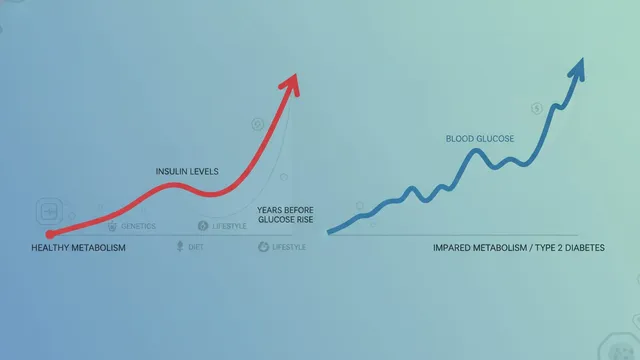
This is the bucket people underestimate the most. Metabolic disease is progressive when left alone. The CDC's National Diabetes Statistics Report estimates that roughly 1 in 3 U.S. adults has prediabetes, and more than 80% don't know it. Of those, a meaningful percentage progress to type 2 diabetes within five years without intervention.
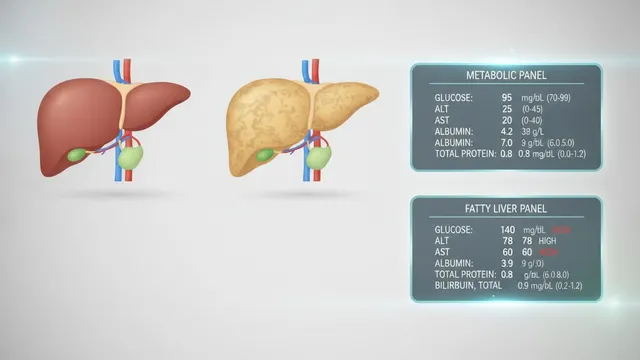
Fatty liver is similar. NAFLD is now the most common chronic liver condition worldwide, and a subset progresses to NASH, fibrosis, and eventually cirrhosis — a trajectory that is far cheaper to interrupt at year one than at year ten.
The math is brutal: every year you wait, the next year's intervention is harder, longer, and more expensive.
3. The Life Cost
This is the one that doesn't show up on any statement, and it's the one most people quietly rank highest when they finally do something about it.
- Sleep that doesn't restore you
- The afternoon energy crash that reshapes your job performance
- Joint pain that talks you out of the hike, the trip, the floor time with your kid
- Mood volatility that insulin resistance quietly amplifies
- The cognitive fog researchers are increasingly linking to metabolic dysfunction (see work summarized by the Alzheimer's Association on midlife metabolic risk factors)
- For women: perimenopausal and menopausal weight gain that hormonal shifts make disproportionately hard to move with willpower alone
- For anyone with PCOS: cycles of frustration that willpower didn't cause and can't fix
You can't invoice a year of not feeling like yourself. But you paid for it.
4. The Opportunity Cost
What would you have done this year if you had 20% more energy, slept through the night, and didn't dread photos?
Started the business. Taken the promotion. Traveled. Dated. Been on the floor with your grandkids. Trained for the thing. Whatever your version is — that's the opportunity cost line, and it's real even though it's invisible.
A Rough Comparison
Here's how I sometimes lay it out for people trying to get honest about what "waiting" is costing them. Your numbers will differ; the shape usually won't.
| Cost Category | Doing Nothing (Annual, Rough) | Actively Addressing It |
|---|---|---|
| Downstream meds (BP, lipids, reflux, etc.) | $500–$2,500+ | Often decreases over time |
| Extra specialist visits & labs | $300–$1,500+ | Stable or decreasing |
| Sleep-related costs (CPAP, studies) | $200–$1,800 | Variable |
| Life/energy/opportunity cost | Uncapped | Trending positive |
| 5-year progression risk | Compounding | Reduced with intervention |
I'm deliberately not putting a number in the right column, because that's a conversation with a clinician — not a marketing chart.
Why "I'll Just Try Harder" Usually Isn't the Answer
Here's the part that took me too long to accept: metabolic disease is not a character flaw. It's biology. Insulin resistance changes how your body handles fuel. Menopause changes the hormonal environment weight is regulated in. PCOS changes insulin signaling. Sleep apnea changes overnight metabolic recovery.
You can absolutely improve all of those with sleep, protein, strength training, walking, and stress work — and you should, and I'd argue you have to. But if you've been "trying harder" for five or ten years and the trend line is still going the wrong way, the honest read isn't that you need more discipline. It's that the underlying biology needs to be addressed as biology.
That's the root cause frame. It's not "what treatment do I want?" It's "what's actually driving this, and what would it take to interrupt it?"
What I'd Actually Do This Week
Not medical advice. Just what I'd do if I were sitting where you're sitting.
- Pull your last two or three years of labs into one place. Look at the trend line, not the individual reading.
- Add up — honestly — what you spent last year on downstream stuff: meds, visits, supplements, sleep gear, the gym you didn't use because you were exhausted.
- Write down the life cost. The stuff no statement captures.
- Then decide whether "waiting another year" is actually the cheap option or just the familiar one.
If any of this is resonating and you want to understand what a physician-supervised path could look like — the mechanism, the eligibility, the whole picture, not a sales pitch — that's what we built tb2.health for. And for readers exploring the broader wellness and longevity ecosystem, folks like Growaton are part of the wider conversation worth knowing about.
A Necessary Clinician Note
I'll say it plainly: nothing in this article diagnoses you, and nothing here tells you what treatment is right for your body. That's a conversation with a clinician who can look at your labs, your history, your medications, and your goals together. What I can tell you is that the cost of not having that conversation tends to be higher than people expect.
The Real Point
The reason I wrote this isn't to scare you. It's because I spent years paying the "stuck" tax without ever adding it up, and once I did, the decision to actually engage with my metabolic health stopped feeling like an expense and started feeling like a refund.
You've probably paid more than you realize already. The good news — and I mean this — is that the ledger doesn't have to keep running in the same direction. It just needs an honest audit and a next step.
Take the audit. That part is free.