You got your labs back. Fasting glucose: 97. A1c: 5.5. Your doctor said "everything looks fine," and you left feeling vaguely unconvinced, because you're tired after lunch, your waistband keeps winning arguments, and your triglycerides have been drifting up for three years like a slow tide.
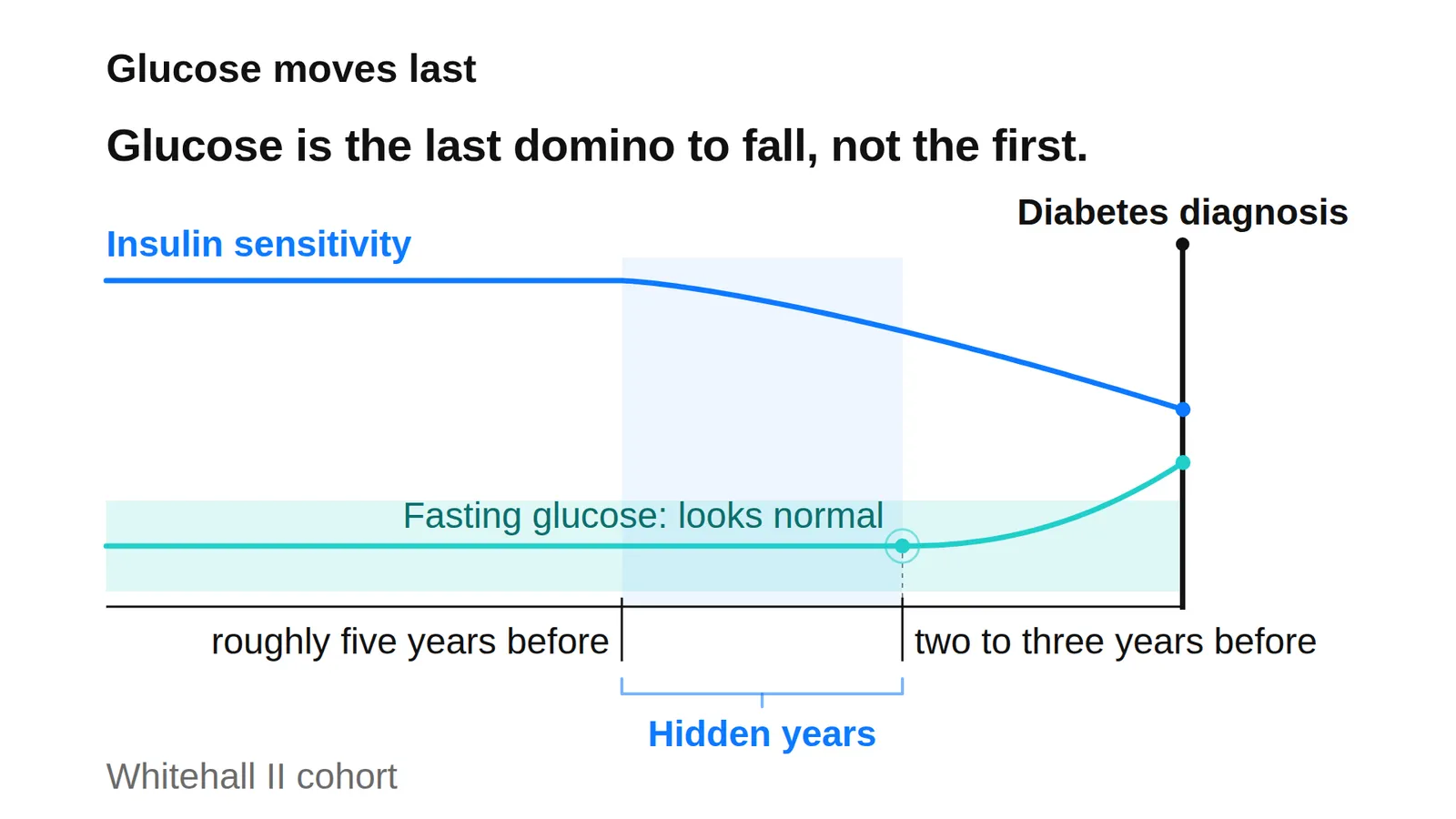
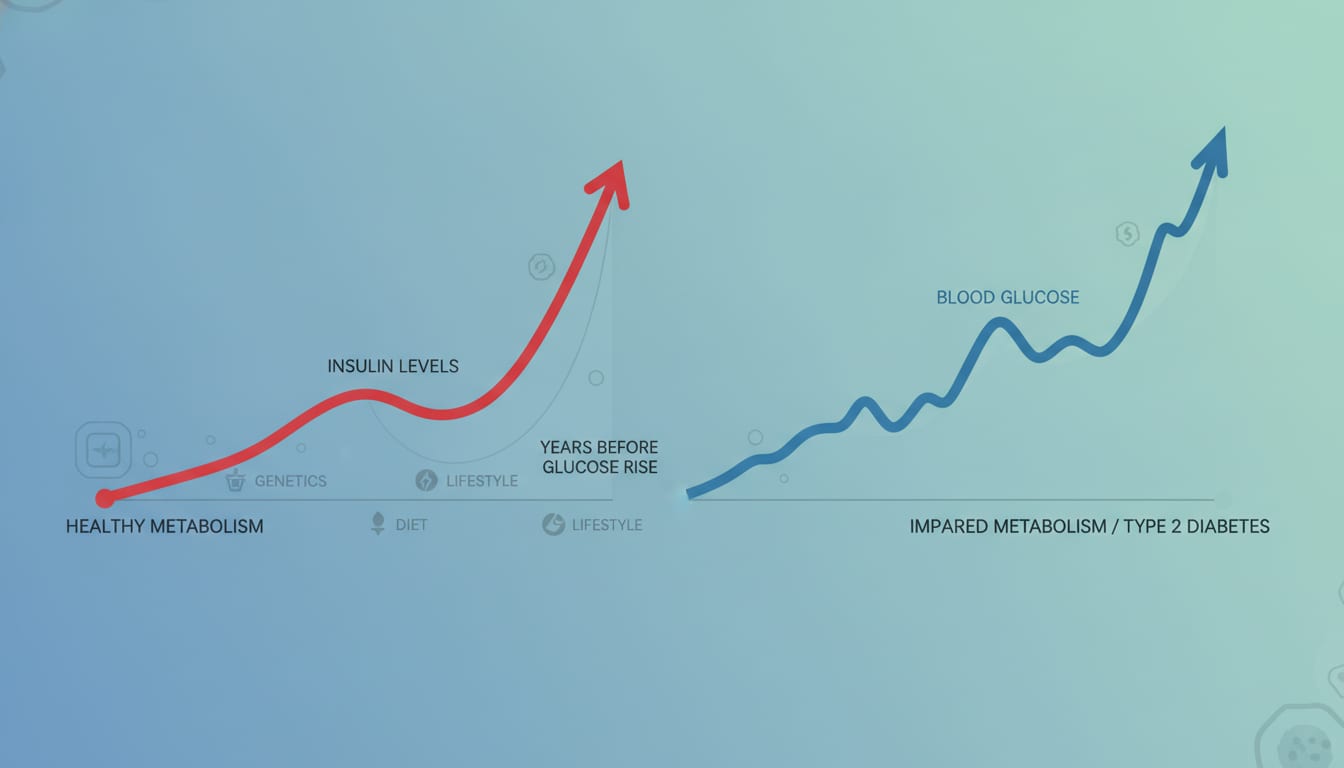
Here's the thing nobody told you: a normal glucose reading does not mean your metabolism is calm. It means your pancreas is still winning. Glucose is the last domino to fall, not the first.
Insulin resistance is the fire. Blood sugar is the smoke. And most of us only get a smoke alarm.
The short version, up front
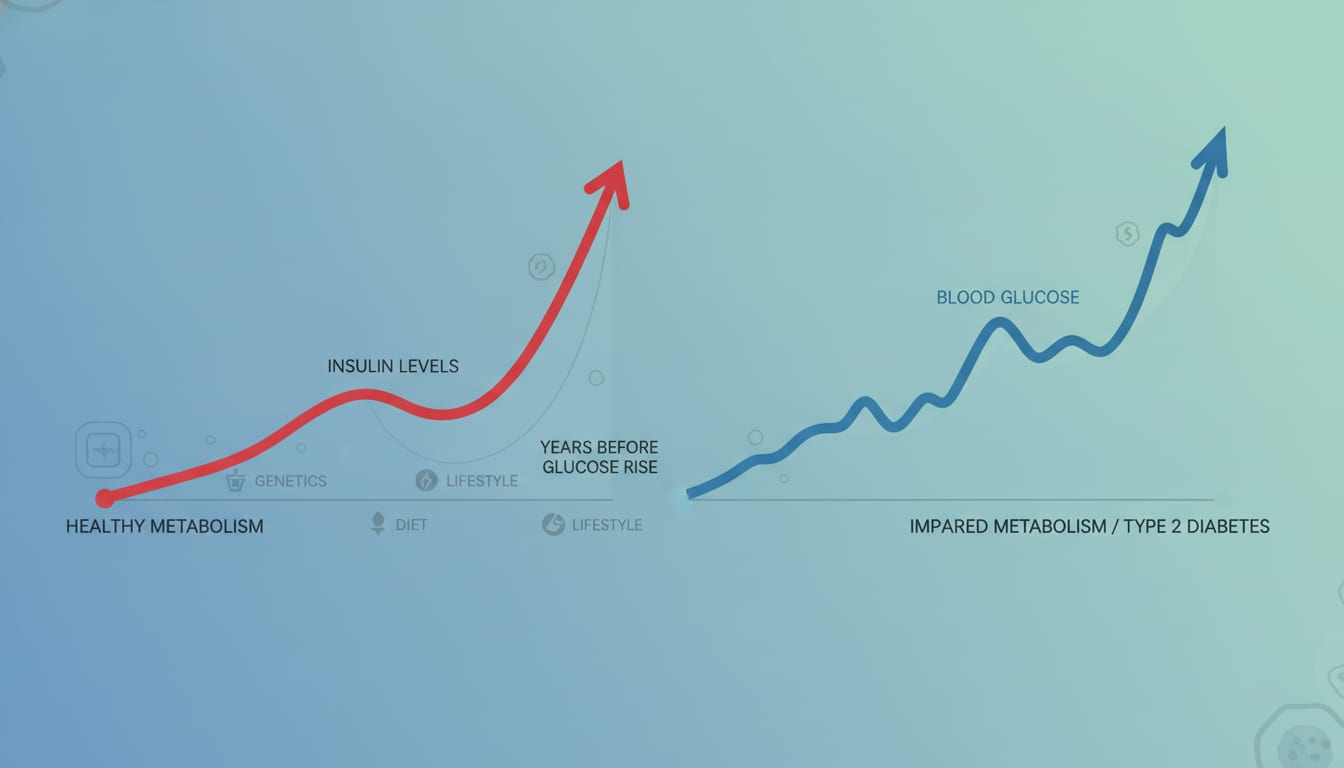
Insulin resistance means your cells respond less efficiently to insulin, so your pancreas secretes more of it to get the same job done. For years, sometimes a decade or more, that compensation works. Your glucose stays in range. Your labs look clean. Meanwhile, the underlying problem is building, and the damage it does (to blood pressure, liver fat, triglycerides, ovarian function, kidney filtration) is already in motion.
By the time fasting glucose crosses into prediabetes range, you are not at the beginning of the story. You are somewhere in the middle.
The Whitehall II cohort tracked British civil servants for more than a decade and found that fasting glucose rose only modestly for years, then accelerated sharply about two to three years before diabetes diagnosis, while insulin sensitivity had been declining for roughly five years beforehand (Tabák et al., The Lancet, 2009). Ralph DeFronzo's Banting Lecture made the same point more bluntly: by the time someone meets criteria for impaired glucose tolerance, beta-cell function is already substantially compromised (Diabetes, 2009).
Translation: the alarm goes off late.
My own "everything looks fine" years
I'm the co-founder of tb2.health, and I'm also our patient zero. I built this company partly because I spent most of my thirties being told my labs were unremarkable.
They were, technically. Glucose in the 90s. A1c under 5.7. No diagnosis, no flag, no follow-up.
What nobody connected into a single picture: triglycerides climbing past 180, HDL sagging into the 30s, blood pressure creeping from 118 to 134, a liver enzyme (ALT) that was "slightly high, probably nothing," and a waist measurement I'd stopped looking at. Five separate shrugs. One coherent pattern.
I'm not a clinician. But I've since spent an unreasonable number of hours reading the literature with our medical team, and the pattern I was living has a name, and it had been visible in my chart for years. Nobody had drawn the line between the dots because each dot, alone, was boring.
That's the part that still irritates me. Not that anyone missed something exotic. That the fire was obvious, and we were all staring at the smoke detector.
Why glucose is a lagging indicator
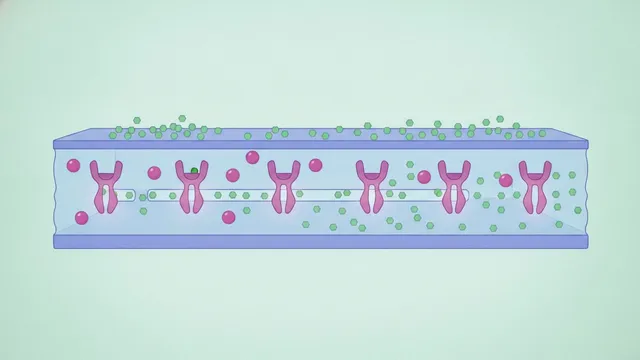
Your pancreas is stubborn. When muscle, liver, and fat cells stop responding well to insulin, beta cells crank up output. Hyperinsulinemia (high circulating insulin) is the compensation mechanism.
So you can have:
- Normal fasting glucose
- Normal A1c
- Fasting insulin two or three times what it should be
And a lab report that says, essentially, "nice work."
Glucose only rises when compensation starts to fail. That is a late-stage event. The CDC estimates roughly 98 million U.S. adults, about one in three, have prediabetes, and more than 8 in 10 of them don't know it (CDC National Diabetes Statistics Report). Those are the people whose glucose has already started to climb. The group with insulin resistance and still-normal glucose is larger and almost entirely invisible.
What the fire actually burns
Insulin resistance is rarely a solo act. It travels with a cluster of findings that the AHA and others formalized as metabolic syndrome (Alberti et al., Circulation, 2009). Meeting three of five criteria qualifies:
- Elevated waist circumference (population- and sex-specific thresholds)
- Triglycerides ≥150 mg/dL
- HDL <40 mg/dL in men, <50 mg/dL in women
- Blood pressure ≥130/85 mmHg
- Fasting glucose ≥100 mg/dL
Notice that four of those five have nothing to do with blood sugar. You can meet criteria for metabolic syndrome with perfectly normal glucose. That is the point.
And the downstream conditions that cluster here are the ones people usually experience first, long before a diabetes conversation:
| What you notice | What it may reflect |
|---|---|
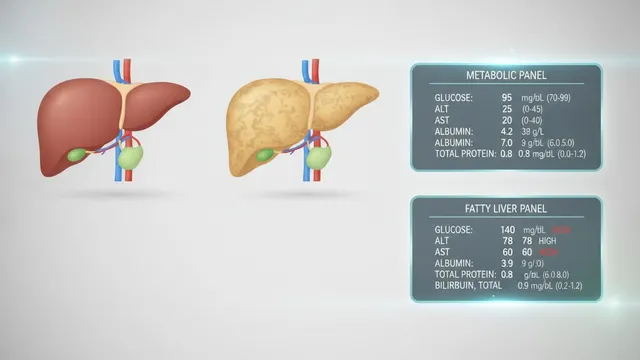
| Fatty liver found incidentally on an ultrasound, or a mildly elevated ALT | Hepatic fat accumulation, strongly linked to hepatic insulin resistance |
| Blood pressure creeping up in your 30s or 40s | Vascular and renal effects of chronic hyperinsulinemia and visceral adiposity |
| Irregular cycles, acne, unwanted hair growth (PCOS) | Insulin resistance is a common driver in PCOS, independent of body size |
| Loud snoring, unrefreshing sleep, daytime fog | Obstructive sleep apnea, which both results from and worsens metabolic dysfunction |
| Skin tags, or dark velvety patches on the neck or armpits | Acanthosis nigricans, a visible skin sign associated with hyperinsulinemia |
| Weight that climbs during perimenopause despite no change in habits | Shifting estrogen, body-fat redistribution toward visceral depots, and declining insulin sensitivity |
| Rising urine albumin on a routine panel | Early kidney involvement within the cardiometabolic cluster |
Any one of these might get treated in isolation. A statin for the triglycerides. A blood pressure med. A CPAP. All reasonable. All treating smoke.
Where the fire starts
Not in willpower. Mechanistically, the best-supported model points toward ectopic fat: lipid accumulating inside liver and muscle cells where it doesn't belong, interfering with insulin signaling. Gerald Shulman's work at Yale laid much of this out, including the finding that even modest reductions in liver fat can meaningfully improve hepatic insulin sensitivity (NEJM, 2014).
Other well-documented contributors:
Sleep loss. Restricting healthy young men to four hours in bed for six nights reduced glucose tolerance measurably (Spiegel, Leproult & Van Cauter, The Lancet, 1999). Six nights. Not six years.
Muscle disuse. Skeletal muscle is the largest site of insulin-stimulated glucose disposal in the body. Lose muscle, or stop contracting it, and you lose your biggest glucose sink.
Visceral and hepatic fat specifically. Where fat sits matters more than what the scale says. Plenty of people with a "normal" BMI are metabolically insulin resistant.
Genetics and ancestry. Risk thresholds differ across populations. Waist criteria are population-specific for exactly this reason.
Certain medications and conditions, including some corticosteroids, antipsychotics, and untreated sleep apnea.
The labs worth asking about
I can't tell you what to order. Your clinician can. But knowing what exists changes the quality of the conversation you have with them.
| Marker | What it reflects | The honest caveat |
|---|---|---|
| Fasting glucose | Current glucose control | Lags insulin resistance by years |
| A1c | Roughly 3-month average glucose | Also lagging; skewed by anemia, hemoglobin variants, altered red-cell turnover |
| Fasting insulin | How hard the pancreas is working to hold the line | Assays vary between labs; no universally agreed "optimal" cutoff |
| HOMA-IR | Calculated estimate of insulin resistance from fasting glucose and insulin | Widely used in research; not a standardized clinical diagnostic |
| Triglyceride-to-HDL ratio | A lipid signature that often tracks with insulin resistance | Performs poorly in Black adults specifically, as shown in multiple cohort analyses; interpret with care |
| ALT and liver imaging | Hepatic fat burden | ALT can be normal even with significant steatosis |
| Waist circumference | Central and visceral adiposity | Thresholds are sex- and population-specific |
| 2-hour oral glucose tolerance test | How your system handles a real glucose load | Catches dysfunction that fasting labs miss, but takes two hours and gets ordered less than it should |
Ask one question at your next visit: "Given this whole panel, do you think I'm insulin resistant?" That single sentence reframes the appointment from five isolated numbers to one trajectory.
What actually moves the needle
The evidence here is unusually good, and it predates every medication currently in the headlines.
The Diabetes Prevention Program randomized over 3,000 adults with impaired glucose tolerance and found that an intensive lifestyle intervention reduced progression to type 2 diabetes by 58 percent over about three years, outperforming metformin's 31 percent in that trial (Knowler et al., NEJM, 2002). The lifestyle arm targeted 7 percent body-weight reduction and 150 minutes a week of moderate activity. Not heroics. Structure.
Practical levers, in rough order of how much leverage I think they carry per unit of effort:
Build and use muscle. Resistance training two or three times a week. Your muscle is metabolic real estate.
Walk after meals. Ten to fifteen minutes after your largest meal blunts the post-meal glucose rise. It is the single most boring, most effective habit I've adopted.
Protect sleep like it's a lab value. Because functionally, it is. If you snore and wake up unrefreshed, get screened for sleep apnea. Treating it is not optional background noise.
Front-load protein and fiber. Meal composition changes the glucose and insulin response to the same calories.
Address liver fat. Modest, sustained reductions in body weight disproportionately reduce hepatic fat, which is where a lot of the insulin resistance story is written.
None of this is glamorous. All of it is boringly well supported.
Where a clinician has to take over
I'll be direct about the limits of this article. I'm not a physician, and nothing here diagnoses anyone. Insulin resistance sits upstream of real medical conditions, and the interpretation of your specific labs, your family history, your medications, and your symptoms belongs to a licensed clinician who can see all of it at once.
Some people reverse a decade of metabolic drift with sleep, strength training, and food changes. Some people do everything right and still progress, because genetics and beta-cell reserve are not negotiable by effort. If you're in the second group, that isn't a character failure, and there are medical pathways worth discussing. That conversation belongs in an exam room, virtual or otherwise, with someone who can order labs and follow you over time. At TB2 Health our clinicians do exactly that kind of longitudinal work, and your own primary care doctor may be the right starting point too. Either way, the ask is the same: get someone to look at the whole pattern, not one number at a time.
Stop reading the smoke
The most useful shift I ever made was mental. I stopped asking "is my blood sugar okay?" and started asking "how hard is my body working to keep my blood sugar okay?"
Those are completely different questions, and only one of them gives you a decade of warning.
If you've been collecting shrugs (slightly high this, borderline that, probably nothing), take the panel back to your clinician and ask them to read it as one story. You may be earlier in this than you think. Early is where the leverage lives.
Go book the appointment. Then go for a walk after dinner tonight. Both count.
Paul Moss Co-founder, TB2 Health
This article is for general education and is not medical advice, diagnosis, or treatment. Talk with a licensed clinician about your individual health, labs, and any changes to your care.