You got a lab result back. Maybe it said "prediabetes." Maybe your A1c crept from 5.5 to 5.9 and your doctor said to "watch it." Maybe you've had type 2 diabetes for years and nobody has ever explained why it happened in the first place.
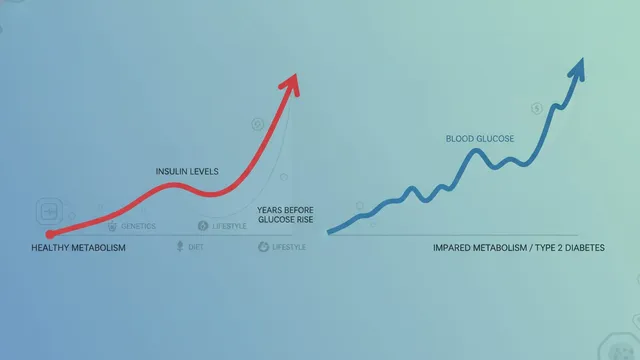
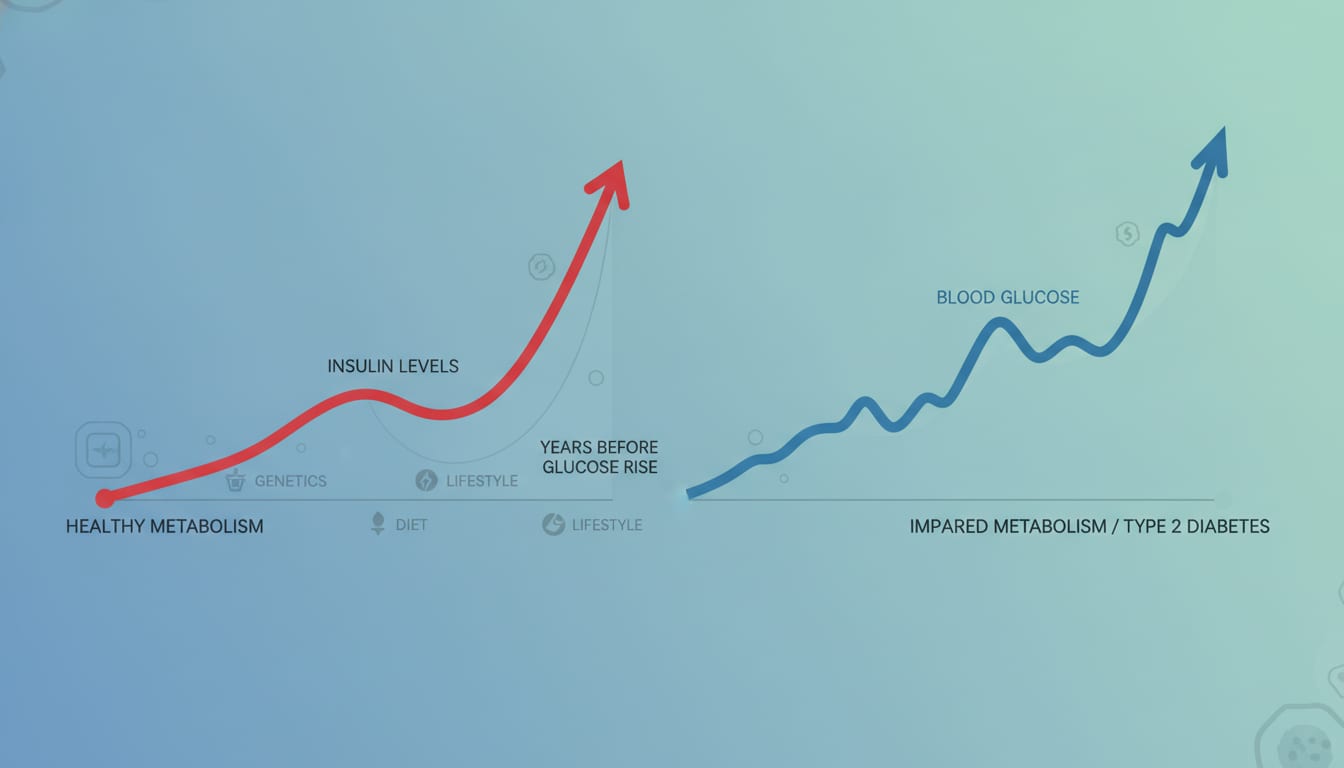
Here's the short version: type 2 diabetes is usually the last chapter of a story that started years, sometimes decades, earlier. That story is insulin resistance. Your blood sugar is the smoke. Insulin resistance is the fire.
Understanding that difference changes what you pay attention to, what you ask your clinician for, and what you actually do next.
Why My Own Labs Sent Me Down This Rabbit Hole
I'm Paul. I co-founded tb2.health, and I was also its first patient, which is a polite way of saying I built this thing partly because I needed it.
For about a decade my annual bloodwork was "fine." Fasting glucose in the 90s. A1c 5.4, then 5.6, then 5.8. Triglycerides drifting up. Nobody ever flagged it, because no single number was out of range. I was normal, technically, on a very slow slide.
What nobody measured was insulin. When I finally had a fasting insulin drawn, the number was high, which told me my pancreas had been working overtime for years to keep that "fine" glucose looking fine. That was the part of the picture I'd been missing.
I'm not a clinician. I can't read your labs and I won't try. But I've spent the last several years reading the literature, talking to the physicians we work with, and living inside this problem, and the single most useful thing I learned is this: normal blood sugar does not mean normal metabolism.
What Insulin Resistance Actually Is
Insulin is a delivery instruction. After you eat, your pancreas releases it, and it tells muscle cells to take glucose out of the blood, tells the liver to stop producing its own glucose, and tells fat cells to hold onto stored energy instead of releasing it.
Insulin resistance means those cells stop responding properly to the instruction. The message gets sent. The cells shrug.
So your pancreas does the obvious thing and shouts louder. It secretes more insulin. For a while, this works beautifully. Glucose stays in range. Your labs look normal. Underneath, insulin levels may be two, three, five times what they should be. This compensated phase can run for ten or fifteen years before glucose budges.
Blood sugar only rises when the beta cells in your pancreas can no longer keep up with the shouting. That's the point at which most people get diagnosed. By then, the underlying problem has a long head start.
Two organs carry most of the story:
- Skeletal muscle. Muscle is the largest disposal site for the glucose in a meal, accounting for roughly 80% of insulin-stimulated glucose uptake, as Ralph DeFronzo's work established. Less muscle, and less frequently used muscle, means a smaller tank to put glucose into.
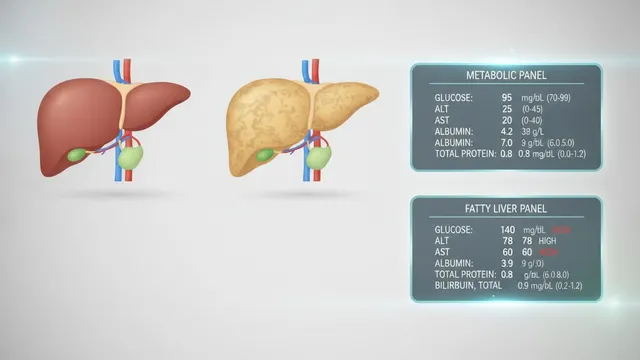
- The liver. A liver loaded with fat keeps pumping out glucose even when insulin is telling it to stop. This is why insulin resistance, non-alcoholic fatty liver disease, and rising fasting glucose so often show up together.
Roy Taylor's research at Newcastle describes this as a twin cycle: fat accumulating in the liver drives insulin resistance, which drives more fat delivery to the pancreas, which impairs insulin secretion. It also introduced the idea of a personal fat threshold. Each person has an individual limit for how much fat their subcutaneous tissue can safely store. Cross it, and fat starts spilling into the liver, pancreas, and muscle where it doesn't belong. That's why some people develop type 2 diabetes at a BMI of 24 and others never do at 35.
Why the Standard Tests Catch It Late
Here's the diagnostic landscape according to the American Diabetes Association Standards of Care:
| Test | Normal | Prediabetes | Type 2 Diabetes |
|---|---|---|---|
| Fasting plasma glucose | Below 100 mg/dL | 100 to 125 mg/dL | 126 mg/dL or higher |
| A1c | Below 5.7% | 5.7% to 6.4% | 6.5% or higher |
| 2-hour OGTT | Below 140 mg/dL | 140 to 199 mg/dL | 200 mg/dL or higher |
These are excellent tests for what they measure. They measure glucose. They do not measure how hard your body is working to keep that glucose where it is.
The CDC estimates that about 98 million American adults have prediabetes, and more than 8 in 10 of them have no idea. Those are the people already in the compensated phase, with labs that read "normal" or "borderline."
A few markers that give a slightly earlier view, all of which belong in a conversation with your clinician rather than a self-diagnosis session:
- Fasting insulin, which shows the effort behind the glucose number.
- HOMA-IR, a calculation combining fasting glucose and fasting insulin. Useful for trend-watching, though assays aren't standardized across labs, so treat it as directional.
- Triglyceride to HDL ratio, a cheap surrogate that often moves before glucose does.
- Waist measurement and blood pressure, which combine with triglycerides, HDL, and fasting glucose to define metabolic syndrome. Three of those five criteria and you meet the definition, per the harmonized AHA/NHLBI statement.
If your A1c is 5.8 and you've been told to "watch it," ask what else is worth measuring. That's a reasonable question and a good clinician will welcome it.
What Drives It, Beyond the Obvious
Calories and movement matter. They're not the whole list.
Sleep. In a classic Lancet study, healthy young men restricted to four hours of sleep for six nights had glucose tolerance drop dramatically compared to their fully rested state. Six nights. That's one bad work week. Sleep-disordered breathing compounds it, which is why obstructive sleep apnea and insulin resistance travel together so reliably.
Muscle mass and inactivity. Muscle is metabolic real estate. We lose it with age unless we actively defend it, and every pound lost is a pound of glucose storage lost.
Hormonal context. Polycystic ovary syndrome involves insulin resistance in a majority of cases, independent of body size, which is why weight gain with PCOS behaves differently than people expect. The menopause transition shifts fat distribution and insulin sensitivity in ways that make the same habits produce different results. Neither is a willpower story.
Chronic stress and some medications. Cortisol raises blood glucose by design. Certain antipsychotics, corticosteroids, and other prescriptions affect insulin sensitivity too. Worth reviewing your full medication list with your prescriber.
Genetics and family history. Some people's beta cells simply have less reserve capacity. You don't choose that. You do get to choose how much demand you place on them.
What the Evidence Says Actually Helps
This is the part I find genuinely encouraging, because insulin resistance is one of the more responsive problems in medicine.
The Diabetes Prevention Program, still the landmark trial, randomized over 3,000 adults with prediabetes. The lifestyle intervention group aimed for a 7% reduction in body weight and 150 minutes of activity per week. Over about three years, their incidence of type 2 diabetes dropped 58% compared to placebo, and 71% among participants aged 60 and older. That intervention outperformed the medication arm in the same trial.
The DiRECT trial went further, testing whether established type 2 diabetes could go into remission. At 12 months, 46% of the intervention group had achieved remission, with remission rates closely tracking the degree of weight change. Not a cure, and not universal, but strong evidence that the pathway runs in both directions for many people.
Practical translations, all of them boring and all of them supported:
Protect your muscle. Resistance training twice a week, and enough protein to support it. You're expanding the glucose tank.
Walk after meals. Ten to fifteen minutes of easy movement after eating blunts the post-meal glucose rise. Muscle contraction pulls glucose from blood without needing much insulin at all. Cheapest intervention on the list.
Sleep like it's a lab value. Because it is one. If you snore, wake unrefreshed, or your partner has mentioned you stop breathing, get screened for sleep apnea.
Build meals around protein and fiber first. Not because carbs are evil, but because the order and composition of what you eat changes the glucose curve.
Track something. A1c every three to six months. Fasting insulin annually if your clinician agrees. Trends beat snapshots.
Where Medical Supervision Fits
Lifestyle change is powerful and it is also, for a lot of people, insufficient on its own. Especially once the compensated phase has run long enough that beta cell function has declined, or when PCOS, menopause, sleep apnea, or fatty liver are stacking the deck.
That's not a moral failure. It's physiology. Metabolic disease is progressive, and the body defends stored energy with real hormonal force.
If your labs are moving in the wrong direction, the right next move is a proper clinical workup: full metabolic panel, lipids, liver enzymes, a conversation about family history and current medications, and an honest assessment of where you sit on the curve. Some people need structure and accountability. Some need pharmacological support. Some need to be evaluated for conditions nobody has screened them for yet.
I'm not a clinician, and nothing here is a diagnosis or a treatment plan. Do not change medications, start a new regimen, or interpret your own labs based on an article, including this one. Take these questions to your physician or, if you're working with us at TB2 Health, to your patient care coordinator and the prescribing physician on your case. The whole point of medical supervision is that someone qualified looks at your numbers, not the population average.
The Part Worth Holding Onto
Insulin resistance is not a verdict. It's a trajectory, and trajectories can bend.
The people I've watched change their metabolic direction did not do it with one heroic decision. They did it by getting the right labs drawn, asking better questions at their appointments, defending their sleep, keeping their muscle, and staying curious about their own biology for longer than most people stay interested in anything.
If your A1c came back at 5.9 this week, that's information, not a sentence. You found out while you still have room to work with. Plenty of people don't get that.
Start with the labs. Then find someone qualified to read them with you.
Paul Moss Co-founder, tb2.health
This article is educational and is not medical advice. Discuss your individual health situation with a licensed clinician.