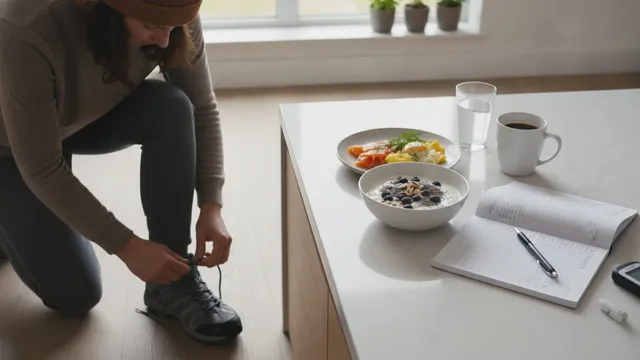
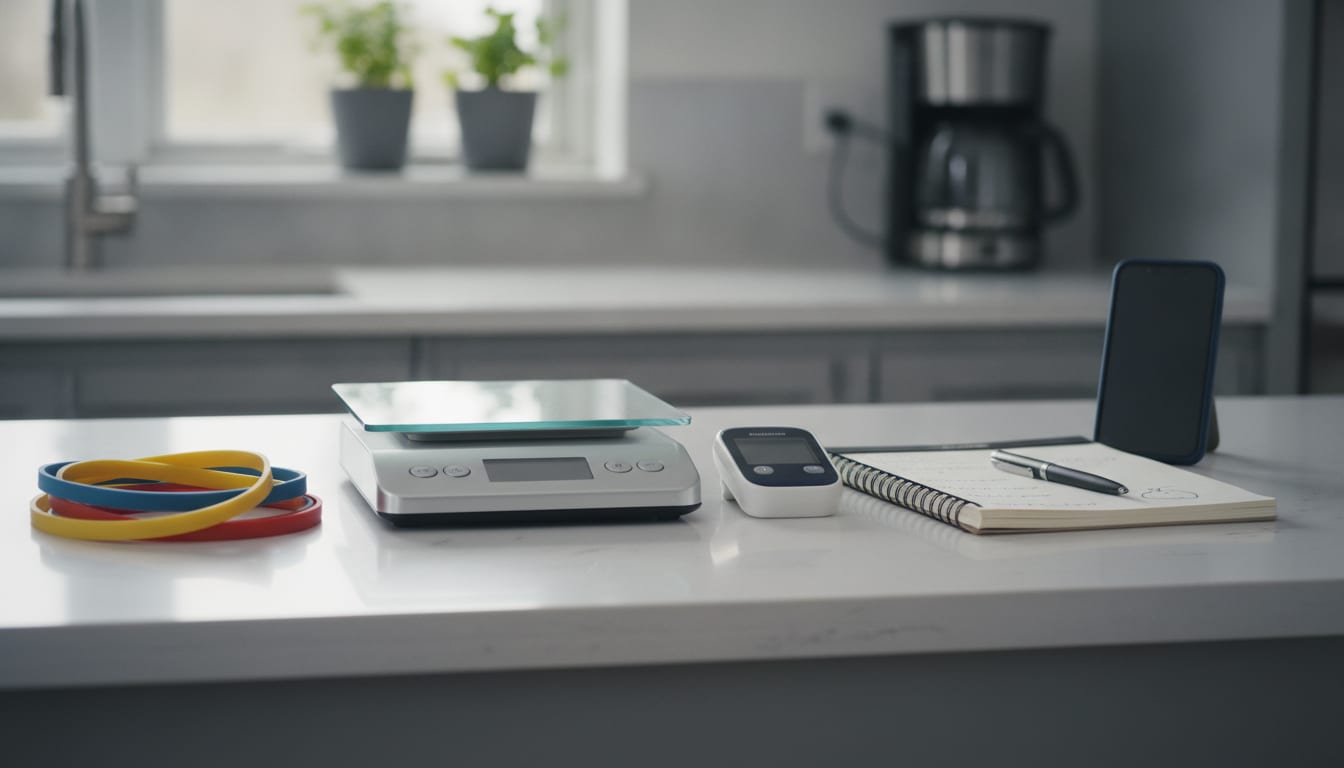
You know what to do on day one. Day one is easy. Day one has adrenaline and a fresh notebook and a grocery haul that looks like a stock photo.
Tuesday is the problem.
Tuesday is a 9am meeting that runs long, a lunch you ate standing up, and the specific flavor of tired that makes the couch look like a medical necessity. Tuesday is where insulin resistance gets better or quietly stays the same, no matter what your medication is doing in the background.
I'm Paul Moss, co-founder of tb2.health and, for what it's worth, our own patient zero. I've had plenty of Tuesdays where I did everything right and plenty where I did roughly none of it. This is the piece I wish someone had handed me in month two.
The short answer, before we go deeper
If you're on a GLP-1 protocol and you want your insulin sensitivity to keep improving, four habits carry most of the weight on an ordinary weekday:
- Eat protein at every meal, deliberately, even when appetite is low.
- Walk for roughly 10 minutes after your largest meals.
- Lift something heavy two or three times a week.
- Protect your sleep window like it's a prescription, because metabolically it behaves like one.
Everything else in this article is detail, sequencing, and the honest caveats. But that's the list. Tape it inside a cabinet door.
Why muscle is the main character here
Skeletal muscle is the largest site of insulin-stimulated glucose disposal in the body. When muscle cells get less responsive to insulin, your pancreas compensates by producing more of it, and that compensation is a big part of what the NIDDK describes as the path from insulin resistance to prediabetes and type 2 diabetes.
Here's the part that makes daily habits matter so much. Muscle contraction moves glucose transporters to the cell surface through a pathway that doesn't require insulin at all. Your muscles will pull glucose out of your bloodstream simply because you used them. That's why a short walk after dinner does something a perfect macro split can't.
Now layer in the GLP-1 context. Any meaningful weight loss, from any method, includes some loss of lean mass alongside fat mass. Body composition data from the semaglutide STEP 1 substudy published in Nature Medicine showed participants lost both, with the proportion of lean mass actually increasing relative to total mass. Translation: this is normal physiology, not a defect in the medication. But it does mean protein and resistance training stop being optional extras. They're how you keep the tissue that does your glucose disposal for you.
I'm not a clinician. I'm a guy who reads the trials and then tries to live inside them on a Tuesday.
The Tuesday map
This is roughly how my weekday runs. Steal the structure, not the schedule.
| Time | Habit | Why it affects insulin resistance | Minimum viable version |
|---|---|---|---|
| Within an hour of waking | 25-40g protein | Sets the day's protein floor before appetite drops off | A protein shake. Done. |
| Mid-morning | Stand or walk for 3-5 minutes each hour | Interrupting prolonged sitting improves postprandial glucose handling | Take calls standing |
| Lunch | Vegetables and protein first, starch last | Meal sequencing blunts the post-meal glucose rise | Eat the salad before the sandwich |
| 10 min after lunch | Short walk | Contraction-driven glucose uptake, no insulin required | One lap around the block |
| Late afternoon, 2-3x/week | Resistance training, 30-40 min | Builds and preserves the tissue that disposes of glucose | Two compound lifts, three sets each |
| Dinner | Protein anchor, fiber, then carbs | Same sequencing logic, larger meal | Eat the protein before the pasta |
| After dinner | 10-15 min walk | The highest-leverage walk of the day for most people | Around the block, with the dog or a podcast |
| 60-90 min before bed | Screens down, room cool | Short sleep measurably reduces insulin sensitivity | Phone charges in another room |
Notice what's missing: nothing here takes an hour, requires a gym membership, or depends on willpower you don't have at 7pm.
Morning: protein before the appetite signal disappears
Direct question for you. How many mornings have you looked up at 2pm and realized you'd eaten nothing?
That's the single most common pattern I see in people on GLP-1 therapy, and it's the one that quietly costs you lean mass. Reduced appetite is the mechanism working. It is not permission to under-eat protein.
Eat, even if you're not hungry.
Protein guidance for adults in active weight loss generally lands well above the RDA. Reviews of protein intake during energy restriction, including work summarized by the International Society of Sports Nutrition, point toward roughly 1.2-1.6g per kilogram of body weight per day for people trying to hold onto lean mass, with some evidence supporting more. Your clinician should set your actual number, especially if you have any kidney involvement.
Practical version: build a floor, not a ceiling. Mine is 30g at breakfast, non-negotiable, even when it's a shake I drink in the car. Hitting 30g before 9am means the rest of the day needs two reasonable meals instead of one heroic dinner you won't have the appetite for.
Hydrate while you're at it. Reduced thirst cues track with reduced appetite cues, and dehydration makes early-treatment fatigue and constipation worse.
Lunch: the order you eat things actually matters
This one feels like a party trick until you see the data.
Researchers at Weill Cornell had participants with type 2 diabetes eat the identical meal in two different orders. When vegetables and protein came before the carbohydrate, post-meal glucose and insulin levels were substantially lower than when the carbohydrate came first. Same food, same calories, different sequence.
You don't need a new recipe. You need a new first bite.
Salad before the sandwich. Chicken before the rice. Vegetables before the bread basket. If you're eating at your desk out of a bowl, eat the protein layer down first and the grain last. It costs nothing and it's one of the few habits that survives travel, restaurants, and other people's cooking.
Fiber does similar work from a different angle, slowing gastric emptying and feeding the gut bacteria that influence glucose regulation. Legumes, oats, berries, and vegetables are the practical sources. Go gradually if you're early in a GLP-1 protocol, because gastric emptying is already slowed and a sudden fiber spike can make you feel awful.
After meals: the 10-minute rule
If you take one thing from this article, take this.
A 2022 meta-analysis in Sports Medicine looked at what happens when people interrupt prolonged sitting with brief light walking. Short bouts of walking, as little as two to five minutes, significantly reduced post-meal glucose and insulin compared with continuous sitting. Standing helped. Walking helped considerably more.
Earlier work published in Diabetes Care found that breaking up sitting time with brief activity bouts reduced postprandial glucose and insulin responses in overweight adults. The signal has been consistent for over a decade.
So: walk after you eat. Ten minutes. Fifteen after your biggest meal. Not a workout, not a performance, just movement while your bloodstream is handling a glucose load.
I schedule mine as a calendar event called "walk" because I am a grown adult who needs to be told what to do by a phone.
Two or three times a week: lift something
The Physical Activity Guidelines for Americans recommend muscle-strengthening activity on two or more days per week plus 150 minutes of moderate aerobic activity. For someone managing insulin resistance during weight loss, I'd argue the resistance half is the underrated one.
The ADA's guidance on physical activity in diabetes, published in Diabetes Care, notes that both aerobic and resistance training independently improve insulin action, and that combining them tends to do more than either alone.
What that looks like on a Tuesday:
- Two compound movements. A squat or leg press pattern, and a push or pull pattern.
- Three sets each, taken close to hard.
- 30 to 40 minutes, including the part where you stare at your phone between sets.
You do not need a program designed by a sports scientist. You need to show up twice a week and gradually add load. Progress on the bar is a better signal of preserved lean mass than anything the scale will tell you.
And if the gym is a barrier, resistance bands and bodyweight work count. The tissue doesn't know what brand of resistance it's fighting.
Evening: sleep is a metabolic variable, not a lifestyle preference
This is the habit people skip because it doesn't feel like effort.
In a controlled study published in the Annals of Internal Medicine, four nights of restricted sleep in healthy young adults reduced insulin sensitivity in fat cells by around 30%. Four nights. Healthy people. No weight change involved.
Short sleep also shifts appetite hormones in a direction that makes the next day harder, which is a cruel design choice by evolution.
So protect the window. Cool room, dark room, consistent wake time. Phone somewhere that isn't arm's reach. If you snore heavily, wake unrefreshed, or your partner has mentioned you stop breathing, raise sleep apnea with your clinician, because untreated apnea and insulin resistance travel together frequently.
What to track, and what to ignore
Daily weigh-ins are a terrible proxy for insulin sensitivity. Here's a more useful dashboard.
| Marker | How often | What it tells you |
|---|---|---|
| Protein grams | Daily, for the first few weeks | Whether your floor is real or aspirational |
| Post-meal walks completed | Daily tally | The single most modifiable glucose habit |
| Strength progression | Every session | Proxy for preserved lean mass |
| Waist measurement | Every 2-4 weeks | Standard clinical marker, less noisy than daily weight |
| A1c or fasting glucose | As your clinician orders | The actual glycemic picture over time |
| Sleep duration | Weekly average | Explains a lot of otherwise mysterious weeks |
The ADA's Standards of Care in Diabetes remains the reference point your clinician will use for glycemic targets, and those targets are individualized. Don't set your own.
One more thing on tracking. Ninety percent of the value is in noticing patterns, not in precision. A checkbox on a calendar beats an abandoned spreadsheet.
Where I see people go wrong
Chasing the scale and neglecting the training. Weight goes down either way. Composition doesn't.
Under-eating protein because appetite is low. This is the big one. Reduced appetite is a feature of the therapy, not an instruction to skip meals.
Going all-or-nothing on movement. A missed gym session becomes a missed week becomes a missed month. Ten minutes of walking on a bad day keeps the habit alive.
Treating plateaus as failure. Weight loss is not linear and never has been. Plateaus are where maintenance skills get built, which is the part that determines what happens in year three.
Making it a punishment. Your relationship with food has to survive this. Habits you resent don't last past the first stressful quarter.
The part where I defer to people with medical degrees
I'm not a clinician. Nothing here is a treatment plan, and none of it should override what your prescriber tells you.
Talk to your care team before you change anything material, particularly if you take insulin or a sulfonylurea, where increased activity and reduced intake can shift hypoglycemia risk. Same goes for blood pressure medication, kidney concerns that affect protein targets, and any new or worsening symptoms.
That's the reason we built tb2.health as a physician-supervised program rather than a prescription vending machine. Dose adjustments, side effect management, and lab monitoring belong in a clinical relationship with someone who knows your history. The habits above are yours to run. The medical decisions are theirs, with you in the room.
Tuesday is winnable
You don't need a perfect week. You need a repeatable one.
Pick two things from the list. Just two. I'd nominate the protein floor and the post-dinner walk, because they're the cheapest to start and the hardest to argue with. Run them for fourteen days without grading yourself. Then add a third.
The people who do well long-term aren't the ones with the most impressive January. They're the ones who figured out what an ordinary Tuesday looks like and made peace with it. Some weeks will be sloppy. Mine still are. The habit isn't broken, it's just having an off day, same as you.
Go for the walk.
Paul Moss Co-founder, tb2.health
This article is educational and is not medical advice. GLP-1 medications are prescription treatments with risks and side effects, and they are not appropriate for everyone. Discuss your individual situation with a licensed clinician.